By Brenda Coutinho
Our ancestral house, a little away from the meandering river along the salt pans, bulged with inmates of all ages. My parents, seven paternal uncles, their wives and children, and my grandparents made our household buzz with activity at all times. It was especially during the monsoons that all of us remained caught in the house, owing to continuous showers for days.
Preparing for the arrival of the monsoons was itself an elaborate affair, which took months of planning and execution by all the womenfolk in our house. By mid-May, our store room would be well-stocked with organic vinegar, virgin coconut oil, and cashew feni stored in garrafãos of all shapes and sizes. The larger porcelain jars held salt from the salt pans, and the smaller earthen jars held tamarind and dried raw mango slices. In the kitchen, white and pink onions and garlic pods were braided and hung neatly above the fireplace, all under my grandmother’s stern supervision.
Throughout the scorching summer, bamboo-woven mats with dry red chillies, maroon kokum halves, coriander seeds, dried coconut pieces, and salted fish and shrimp adorned the sprawling space in front of our house for purumenth.
I have always loved monsoons, but the smell of wet mud and the first shower of rain were special occasions for us in our childhood. No matter what time of day or night, all of us would go outside and enjoy the first showers. It was a tradition. The following day was full of fun, as we went shopping in Margao for new raincoats for school. Deep in our hearts, we craved colourful umbrellas, a prerogative reserved only for grownups. Once back home, we had to try on hand-me-down rainy boots that reached up to our knees, passed down by older siblings and cousins.
Walking forth and back to school was an adventure for us. The mud footpath would usually get submerged, and we would happily wade through knee-deep water. By the time we reached the school, most of us would be completely drenched. The nuns in the convent school would take rounds to check on the students, and anyone found soaked in rainwater, would be sent back home.
It was my first day of Class VI at school. It was an extra special day for me as I now had a beautiful light pink umbrella with a multi-coloured floral border. It was gifted to me by my godmother. It was the most precious thing that I owned at that age. I simply loved it. That morning, I was the first one to leave the house, in my same old school uniform, boots, a jute school bag on my back, and a new umbrella. I was elated, I felt all grown-up. It had been raining continuously since the night before. My brother, in his raincoat, tagged along with me to the tinto. The rain subsided, and finally stopped. I chose not to close my umbrella, even though it was not raining anymore. My cousins and the other children from the vicinity joined us at the tinto in their beautiful multi-coloured raincoats and umbrellas bought from Margao market. Claudia, the girl from the big house that stood near the church, came with a brand-new umbrella as usual. “Hey, Claudia, your umbrella is beautiful! Where did your father buy it from?” exclaimed my brother in an attempt to irritate me. As though she was hoping that someone would comment on her umbrella, she replied promptly, “Oh, my mummy brought it for me from Kuwait… that’s where she works.” I tried to ignore her beautiful umbrella.
The day at school was fun, meeting up with all my classmates, and of course showing off my new umbrella. Later that evening, back home, my cousins and I took turns going out in the rain with my umbrella. The rain pelted hard on the umbrella, the leaves heavy with rainwater, drooped, while the smaller ones quivered. Two of us walked aimlessly balancing the umbrella in heavy rains in the vicinity of our house, occasionally jumping in muddy puddles. We rushed back home half-drenched when Tia Margaret scolded us from the adjacent house. But this never deterred us from playing in the rainwater. We tore pages from old newspapers and made mini paper boats that were left in the narrow streams formed by incessant showers. Some boats battled the gusty wind and rain and sailed far, even up to Tia Margaret’s compound at times, while others sank immediately.
On one occasion, it had been raining cats and dogs. There was no electric current in the village for three consecutive days. There was news that an old mango tree had uprooted and snapped the electric wires. We did not care much about it, though. Our Petromax kerosene lamp and other home-made lamps were good enough. As we were happily retiring for bed, we overheard the elders talking nervously about someone who had gone missing from the village. It was thundering and lightning, and the wind was blowing furiously. My brother and I snuck into the front room and joined the others. Peeking out, we saw a group of men in our balcão discussing animatedly.
Robert, who had gone to the village on the other side of the river, had not returned home. Robert, a former sailor on a cruise ship, was still a bachelor at 45 and looked young and robust for his age. He was well-known in the village for two things – his long lush black hair, and fluent English. Always seen smoking foreign cigarettes, he was one of the enigmas of the village. We would look at him in awe; it was a general belief in the village that he had visited more than thirty countries! “Robert has swum the high seas; how can he drown in a river like ours?” Said someone amongst the gathered. Everyone agreed. My grandmother had an idea. “Let’s ask Saalu.” Saalu, the boatman whose canoe plied the river, was summoned despite the heavy rains. He looked nervous. When questioned, he informed them that he had ferried Robert and his cycle to the other side of the river that morning. After a bit of more cross-examination, he confessed that as he was returning home in a thunderstorm, he had, from a distance, thought he saw a cycle floating on the river. “It can’t be true. How can a cycle float, and not sink? I think it was my imagination.” He cut short the sentence.
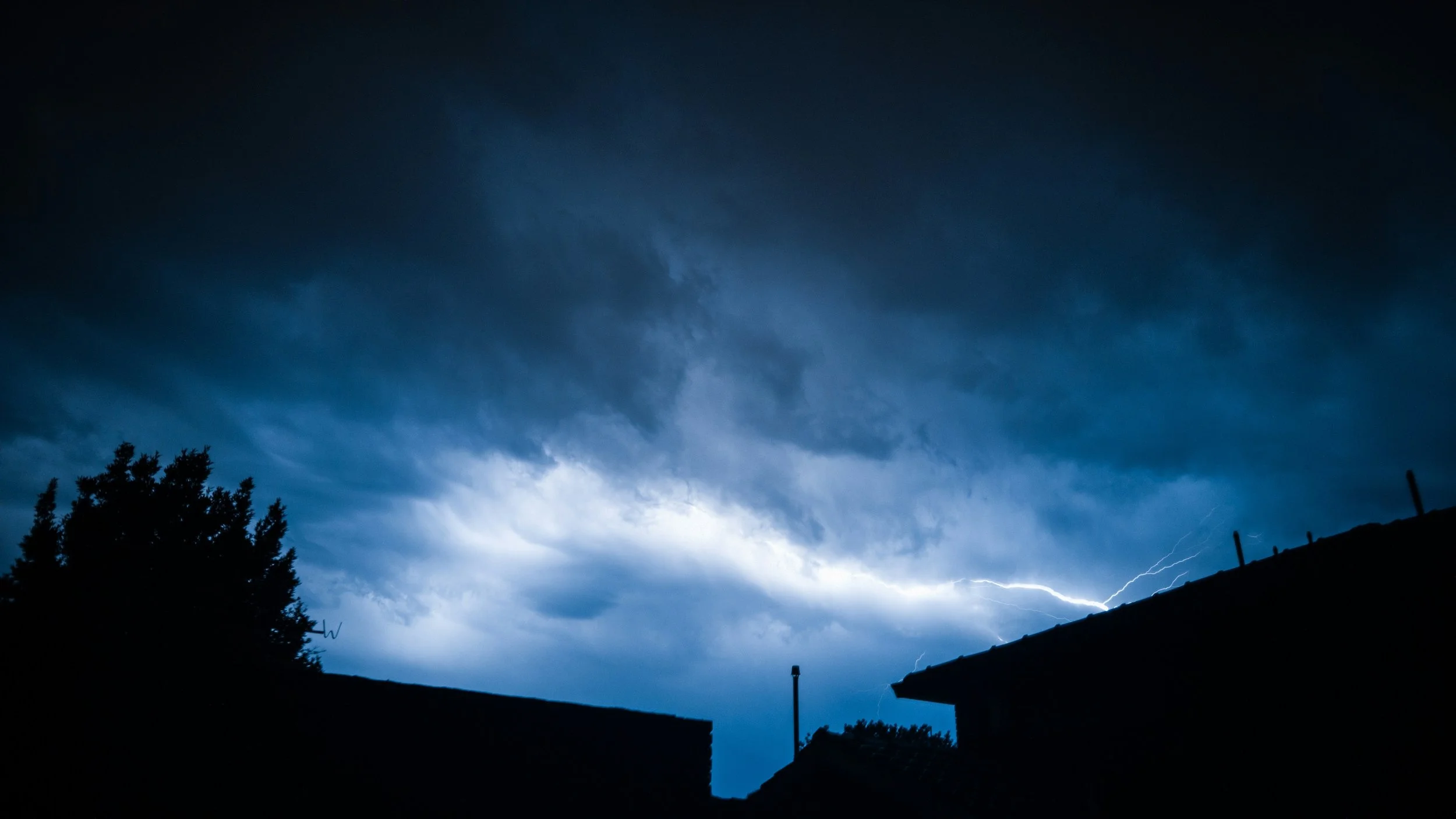
Everyone was quiet, gripped by a sudden fear. We had grown up hearing of rumours of supernatural incidents on the river. A few women made the sign of the cross. Once again, the men looked for a solution—someone brought battery torches from the neighbouring homes, and a unanimous decision was reached to go to the riverbank. The rain was ruthless, so they decided to wait for it to subside. As the rain receded and the men were about to leave for the river, there were sudden streaks of lightning that shattered the open sky, followed by loud thundering. In the dim light, they saw a man’s silhouette approaching our house. The long-haired figure looked drenched and haggard, and was walking holding his cycle by his side. Everyone froze. As the man neared, someone from the crowd shouted, “Robert! Robert! Is that you?
The man parked his cycle on its stand and plonked on the ground. “What’s going on here?” Why has everyone gathered here?” It was Robert indeed! “Where were you? We were worried about you?” Shouted grandmother.
“Oh, I was caught in the rain… by the time I reached the river bank on the other side, Saalu had left, and so I carried my cycle over my head, and crossed the river. I have swum high seas, but this was not easy. I was too tired, so I decided to sit under a tree till the rains subsided.”
Everyone sighed in relief and began picking up their respective umbrellas to head home. Just then, there was a cloud burst. Everyone huddled inside the balcão… caught in the rain.
Brenda Coutinho is an academic and Assistant Professor of English at Government College of Arts, Science and Commerce, Quepem, Goa. She has presented several research papers, including the most recent at the International Conference on “Empires and (Post-) Colonialism: (Counter-) Narratives of Power in Educational Media in a Global Perspective” at Braunschweig, Germany. She is passionate about creative writing and is the author of the novella, A Matter of Time: Vignettes of a Golden Childhood in Goa, (Goa 1556, 2013) supported by the Directorate of Art and Culture, Government of Goa, and a children’s short story book, Paw Prints: A Collection of Pet Stories for Children.
Banner image by Linda Xu downloaded from Unsplash.com