Click here to join the Joao Roque Literary Journal community. This is a space to share literary journeys, book launches, workshops, competitions, industry news and receive short stories, poems and narrative non-fiction published on the journal.
By Nilankur Das
The rains had passed, the earth no longer drank but let the water fester in shallow pools, the smell of rot rising, clinging to the air, to the walls, to the skin of those who moved through it. In the village of Assolna, between the rivers Mandovi and Sal, the people had learned to accept what was given to them, the meat in their curries, the water in their wells, the news that came to them in murmurs from one mouth to another, each syllable softening until even the most urgent of warnings lost their edge. And so it was that the shawarma stalls arrived, bright yellow and red against the dull inevitability of daily life, the meat turning slowly on metal spits, the juices falling, the scent spreading, irresistible.
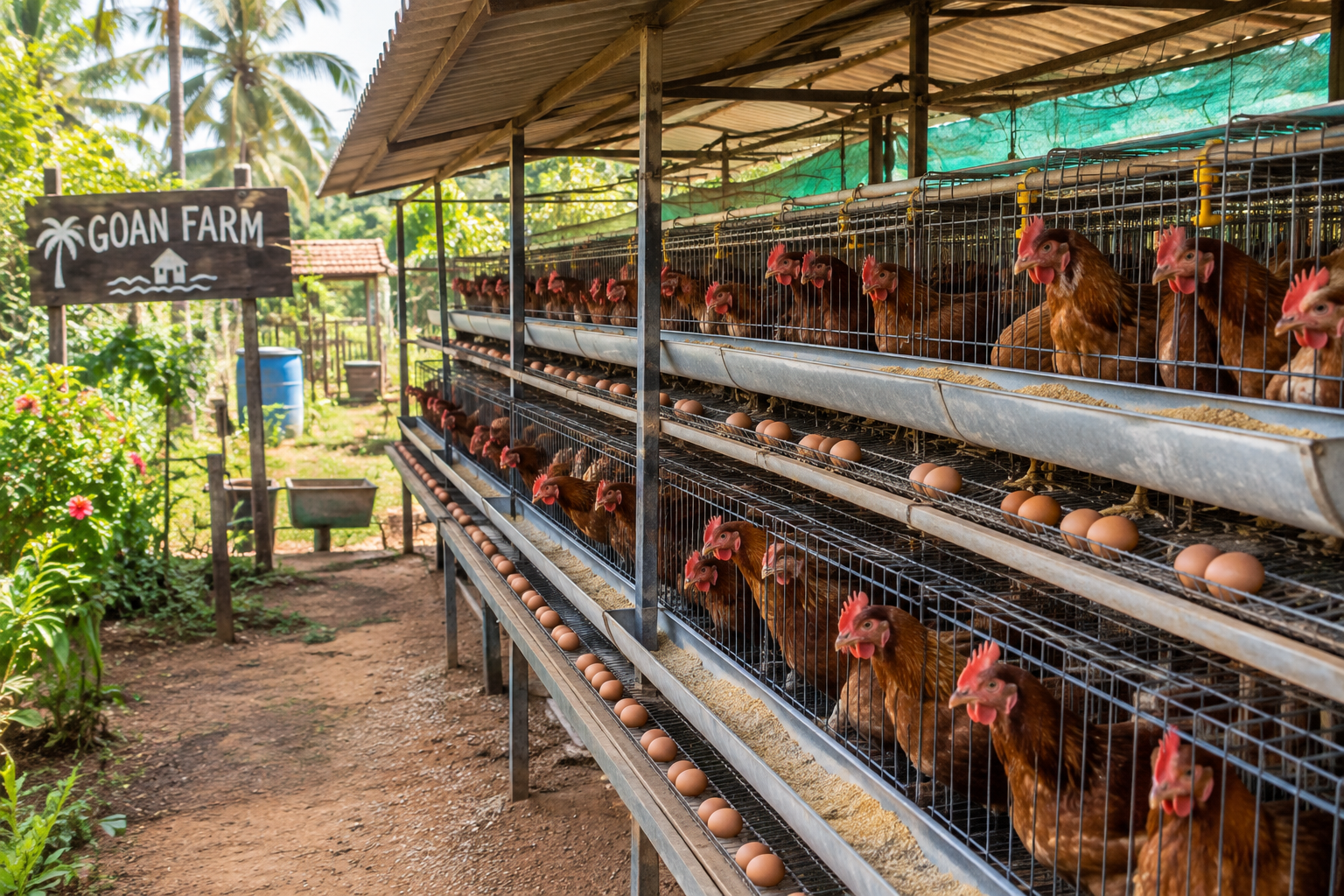
Bonifacio D’Mello, whose farm stretched beyond the village, beyond the concerns of men who did not count their profits in stacks of crumpled notes, watched as his diseased chickens died in their cages, their glassy eyes unseeing, their bodies collapsing before they were even taken to slaughter. He had seen worse, he told himself, disease was an old companion in the poultry trade, and waste was a sin against profit. He had built something from nothing, had learned that there was no problem so great that it could not be minced into smaller pieces, spiced beyond recognition, and fed to the hungry.
The trucks waited at his gates, the drivers with their cigarettes and their blank faces, knowing not to ask questions, knowing that in this business the less one knew, the better one slept.
The shawarma stalls multiplied, they spread from Panjim to Palolem, from Margao to Mapusa, their signs declaring themselves the kingdom of an absent king, Doner King, a name that promised something distant, something foreign, something that might distract the eater from the uneasy churning in their gut. The people came, they handed over their rupee notes and digital transfers, they took their wraps, they chewed and swallowed, and if they fell ill, if their stomachs burned, if their dreams filled with feathered bodies piled high, that was simply the way things were.
Father Ignatius at St. Sebastian’s Church had begun to notice something unusual, though unusual things were often explained away, a trick of the mind, an excess of faith, a superstition in the guise of a vision. The confessions came in hushed tones, voices trembling not from guilt but from something deeper, something nameless. Father, I have sinned, I stole from my wife’s purse to buy shawarma, father, I wake up at night with a weight in my stomach, as if something inside me does not belong, father, I dreamed of chickens, they looked at me and they screamed without making a sound.
Elsewhere, in an office filled with the hum of ceiling fans and the dust of neglected files, Savita Naik, officer of the Food Safety Department, traced a pattern in the complaints, in the swelling numbers of sicknesses, in the slow spread of an unease that had yet to name itself. She took her notes, she followed the trail, and it led her to D’Mello’s Choice Chickens, where the air itself seemed thick with something that resisted movement, the smell of filth and feathers and futures already decided.
Bonifacio met her at the gate, a scowl on his face, his belly shifting with each step he took towards her. You people, he said, always looking for trouble where there is none. Savita said nothing, she stepped past him, let her eyes confirm what she had already known. The birds slumped in their cages, their bodies barely alive, their breath slow, waiting for the moment when they would not have to breathe anymore. The workers moved with the detached efficiency of men who had long learned not to see.
Her report was written, sent, received, and forgotten, lost in the place where things that matter go to die. The newspapers dubbed it “The Shawarma Conspiracy.” Bonifacio, caught between denial and desperation, tried to bribe his way out, but the evidence was overwhelming. For a few days, the stalls stood empty, the neon signs dark, the rotating spits still, but then the lights flickered on once more, the meat sizzled, the people returned, their hunger greater than their memory, their silence more certain than their doubt. Nothing had changed. Nothing ever did.
Bonifacio sat in his cell, but it was a cell only in name, for men like him did not suffer the way other men suffered, they merely waited for the next opportunity, the next moment when the world’s attention wavered. A shadow moved in the dimness, a hand extended, a bundle of bread and meat offered without ceremony.
Shawarma, the voice said.
Bonifacio hesitated, but only for a moment. He took it. He ate. And the world continued, the meat turned on its spit, the trucks left the farms, the people swallowed their sickness, their doubts, their voices. They consumed, and in doing so, they were consumed.
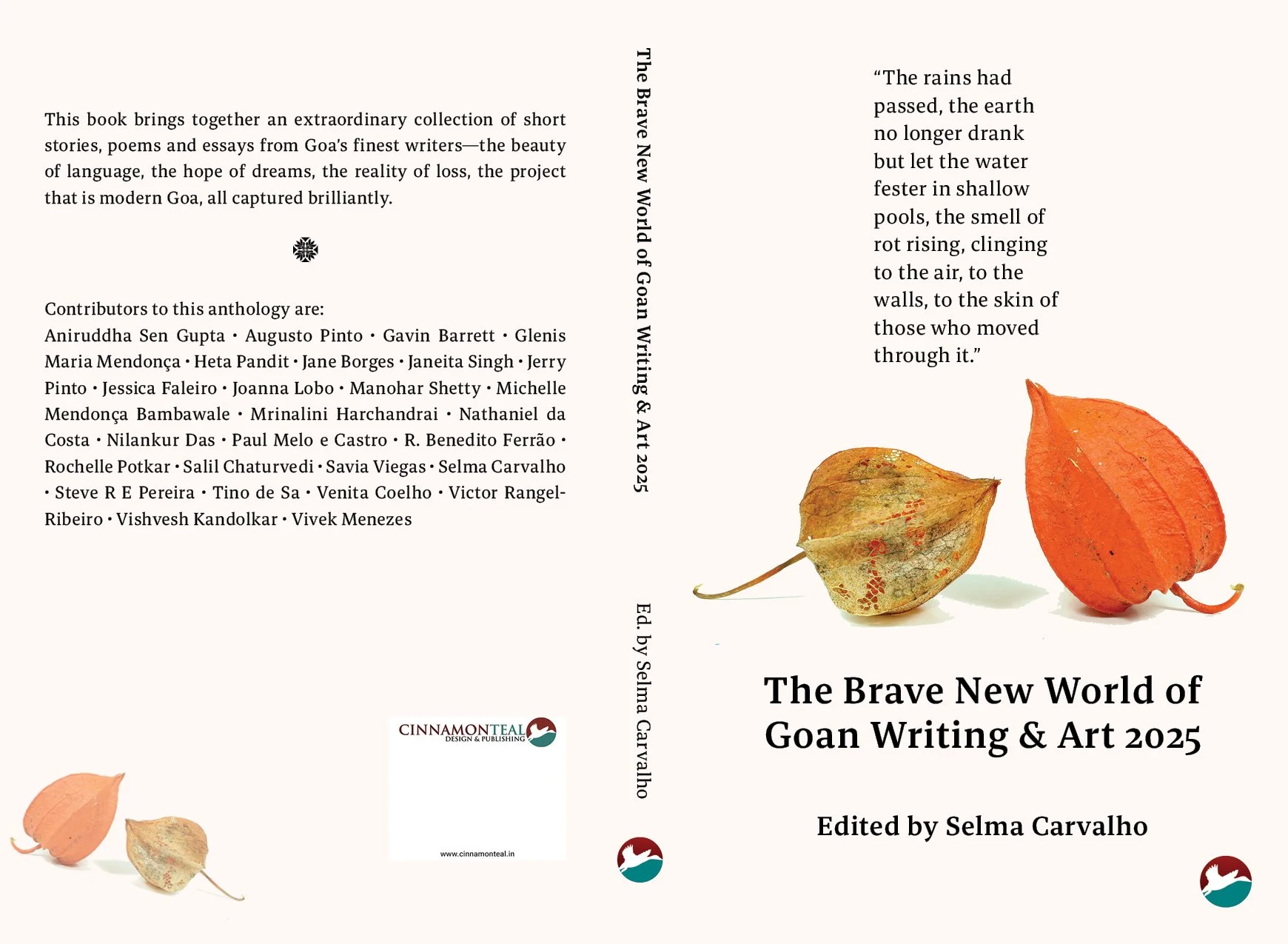
This story was first published in The Brave New World of Goan Writing & Art (Cinnamon Teal, 2025) and can be purchased here.
Nilankur curates provoking programs at the Museum of Goa. As a columnist for O’Heraldo, he engages with pressing social and cultural issues, bringing nuance and clarity to the public discourse.
The banner image is AI generated.