“On the 24th night, we all walked to City Church for midnight mass in Pune’s December cold. After mass, we shared cake, and coffee and wished family and friends. We were all dressed in our brand new Christmas couture. ”
BY Michelle Mendonça Bambawale
I grew up in Poona in a pluralistic, multicultural society. Terms we did not know or need to understand. We lived them. Almost utopian in contrast to today’s world, where politicians and priests use religion as powerful weapons, making us look at each other with growing suspicion. My closest, dearest friends remain from different beliefs, backgrounds, and geographies. Today as I look back with nostalgia with my newly acquired provincial Goan lens, I realise we lived in the middle of a giant cultural Venn diagram of two intersecting communities. Our school, college friends and neighbours, who were of every religion and background were one circle, and our family and Goan community were the other. Our school, college, and street mates also belonged in similar Venn diagrams intersecting with their own Sindhi, Bohri, Bengali, Parsi, Sikh, Marwari or Maharashtrian communities and customs. We visited each other for Diwali, Ganpati, Navroz, Eid and Durga Puja immersing ourselves in the food and festivities, embracing every celebration with equal enthusiasm. When we were in high school, we stayed over in each other’s homes pretending to study but instead discussing boy, movie star and cricketer crushes.
At home, we belonged to a strong Goan Catholic community that lived close to the City Church (Church of the Immaculate Conception) and the Poona Goan Institute (PGI). A social club for Goans in Poona built in 1904. This church is at quarter gate, at the boundary of the original British cantonment and Poona city. My parents, my sister Ingrid and her husband Brian, and my husband Bharat and I, all got married in the City Church. My parents, grandparents, uncles, and aunts are buried in the church cemetery.
By the end of the 18th century, when the Peshwas were waning in power, Peshwa Madhavrao II, the de facto leader of the Maratha Empire, got into an unlikely alliance with the Portuguese empire in Goa to strengthen his army. The Portuguese and Goan soldiers were Roman Catholic. Historical records say Madhavrao donated four acres of land for these soldiers to have a place to worship in 1792, marking the birth of the Catholic Church in Pune.
The PGI was the centre for community activities. We looked forward to the PGI’s long event calendar over Christmas. We did not notice the rundown buildings or the peeling paint. The toilets still haunt me, they were filthy and stinky. As young kids, the highlight was the annual Christmas tree party. We always had fashionable new custom-made dresses to wear. There were needle and thread, lime and spoon and sack races. The highlight was waiting for Santa Claus to give us our Christmas presents. As we grew into teenagers, the Christmas dance at the PGI was the social event of the year. The stylish dresses and shoes, the band, the music, the jiving, the adrenaline that kept us dancing all night long to the beats of Dire Straits, Queen, Billy Joel, Elton John, Wham, Stevie Wonder and the rest of the 80s top hits. Unfortunately, we had not yet embraced our feminism yet, so we innocently waited to be asked to jive by some male teenybopper who had more attitude than facial hair. However, we loved dancing with each other. Girls are much better dancers than boys, anyway.
Before Christmas, we went carol singing in the neighbourhood. As children, it was with my parents and their CFM (Catholic Family Movement) group of families. When we were teenagers, with our friends in our youth group (SSU-Searching and Service in Unity). There were weeks of practices with guitars. We carried candles to read the carol song sheets and walked or cycled through those cold Poona winter nights that resounded with Bonne Natale, Mary’s Boy Child, Away in the Manger, Feliz Navidad, as well as Jingle Bells and Rudolph the Red Nosed Reindeer. Lots of special memories.
As the priest sermonised about selflessness: “Christmas is a time for giving, not just getting presents, shopping and partying.” Our carol singing included singing in orphanages and old age homes. We often took cash, clothes and Christmas sweets or cakes. My parents as part of their CFM mission distributed the ingredients to families who could not afford a nice meal at Christmas. They raised funds in the community to buy rice, veggies, oil, bread, flour, and cake, and on the 24th morning. Mummy and Daddy and members of the CFM distributed these Christmas food hampers from our home.
Before Christmas we put up our crib and a tree. We did it together as a family. Cleaning the house, changing the curtains, hanging the decorations. All these Yuletide traditions survive. Writing and mailing Christmas cards and making and exchanging Christmas sweets were important traditions we followed religiously. In our home, we made Goan favourites - kulkuls, neories, cheese straws, marzipans, and jujubes.
Despite her stressful responsibilities as a convent school Principal, Mummy made Goan staples—sorpotel, pork vindaloo and salted tongue in the build-up to Christmas. Making sorpotel is a very tedious process, not something I have the patience or the culinary skills for. The recipe includes boiling the pork, chopping it up into tiny pieces, then frying the pieces, separately grinding and sauteing the masala with the special chillies and Goa vinegar and simmering the whole dish together for a long while. Truly a labour of love. The complex spicy, tangy flavours are worth the effort.
Since both our parents were very organised, the favourite Goan sweets, savouries, and mains were all meticulously planned well in advance, and neatly written down in Daddy’s impeccable handwriting in a big A3 size register. Ingredients were bought from the most economical and reliable stores. Those Goa Mapusa market bags were pressed into use.
The multi-talented Aunty Iris (Our next-door neighbour, my mother’s bestie, and my bestie Preeti’s mother) was the epicentre of Christmas sweet making; her many talents included baking plum cakes and creating marzipans, jujubes, and marshmallows.
Making kulkuls (a Goan speciality made with flour, coconut milk and sugar) was a community event. We all sat together for many evenings before Christmas, rolling the small balls of dough on the back of forks and clean combs. I was useless with my limited fine motor skills, but it was a warm experience. The same with neoris, rolling the small round dough, filling it with the coconut, Soji and sugar mix, folding over, sealing the edges perfectly, then laying them out on newspaper ready for deep frying in an efficient assembly line. We all sat around the dining table chatting and listening to Christmas carols. My parents did the deep frying as I wasn’t allowed close to hot oil. With good reason, I am still too clumsy to deep fry.
Mummy loved listening to music, so every morning we woke up to Radio Ceylon playing old favourites including Belafonte, Sinatra and Cliff Richard, later it was ABBA, Carpenters and Boney M. In the early 80s my parents made their first international holiday together to the Far East. They brought back a cassette player. Mummy’s prized possession was her Jim Reeves Christmas carols tape. She played them over and over on that fancy TEAC deck, amplified with a solid Philips amp and speakers.
A few Mendonça specials included home brewing raisin wine. I don’t have the recipe but remember the ritual. Mummy and Daddy soaked the black raisins months in advance. It fermented in a big barni with the required amount of yeast and sugar. At the right time, the wine was strained with a muslin cloth and then left to stand and age. The fine wine was ready for Christmas.
On the 24th night, we all walked to City Church for midnight mass in Pune’s December cold. After mass, we shared cake, and coffee and wished family and friends. We were all dressed in our brand new Christmas couture. Neighbours, church community and parishioners were there, including many who did not live in Poona but came back for Christmas. When we got home, we had presents from Santa waiting in our stockings. As teenagers we headed out to all night parties, music, dancing, and bonfires. Over those three weeks, we did not sleep much. It was one long party, and we had the stamina. Starting with carol singing, carrying on to midnight mass on Christmas Eve. Christmas day was filled with the joy of friends and family dropping in to visit, sharing cake, homemade wine and Christmas sweets. The family Christmas lunch ran long, leaving just enough time to dress up for the Christmas dance on the 25th night. The week carried on with different aunts and uncles hosting their lunches or dinners. There were always birthdays and anniversaries. My sister Ingrid’s end-December, my parent’s anniversary beginning January. Many other weddings to attend too. The celebrations officially ended on the Feast of the Three Kings on the 6 of January when you took down your crib, decorations and collapsed. Oh, the joys of youth.
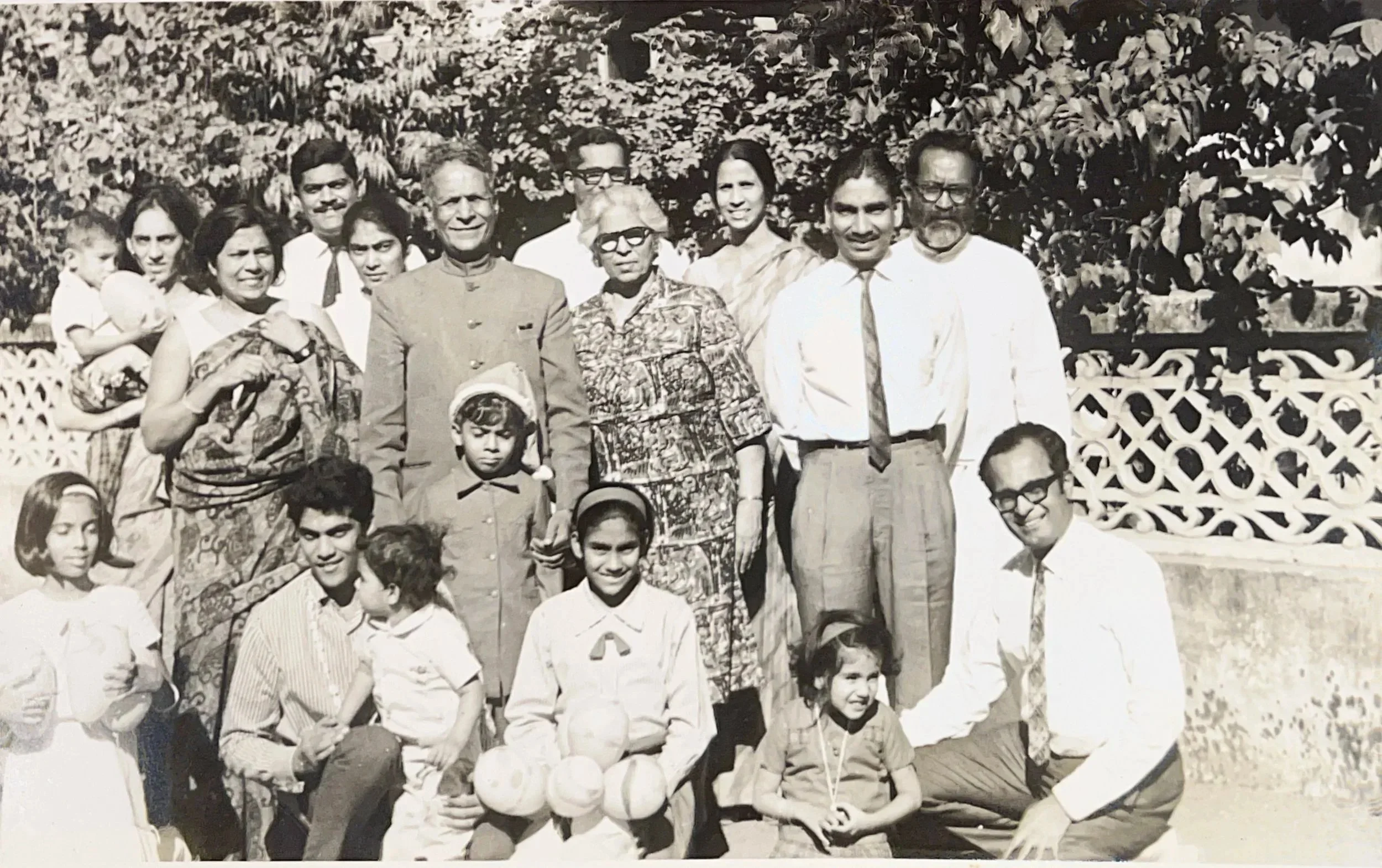
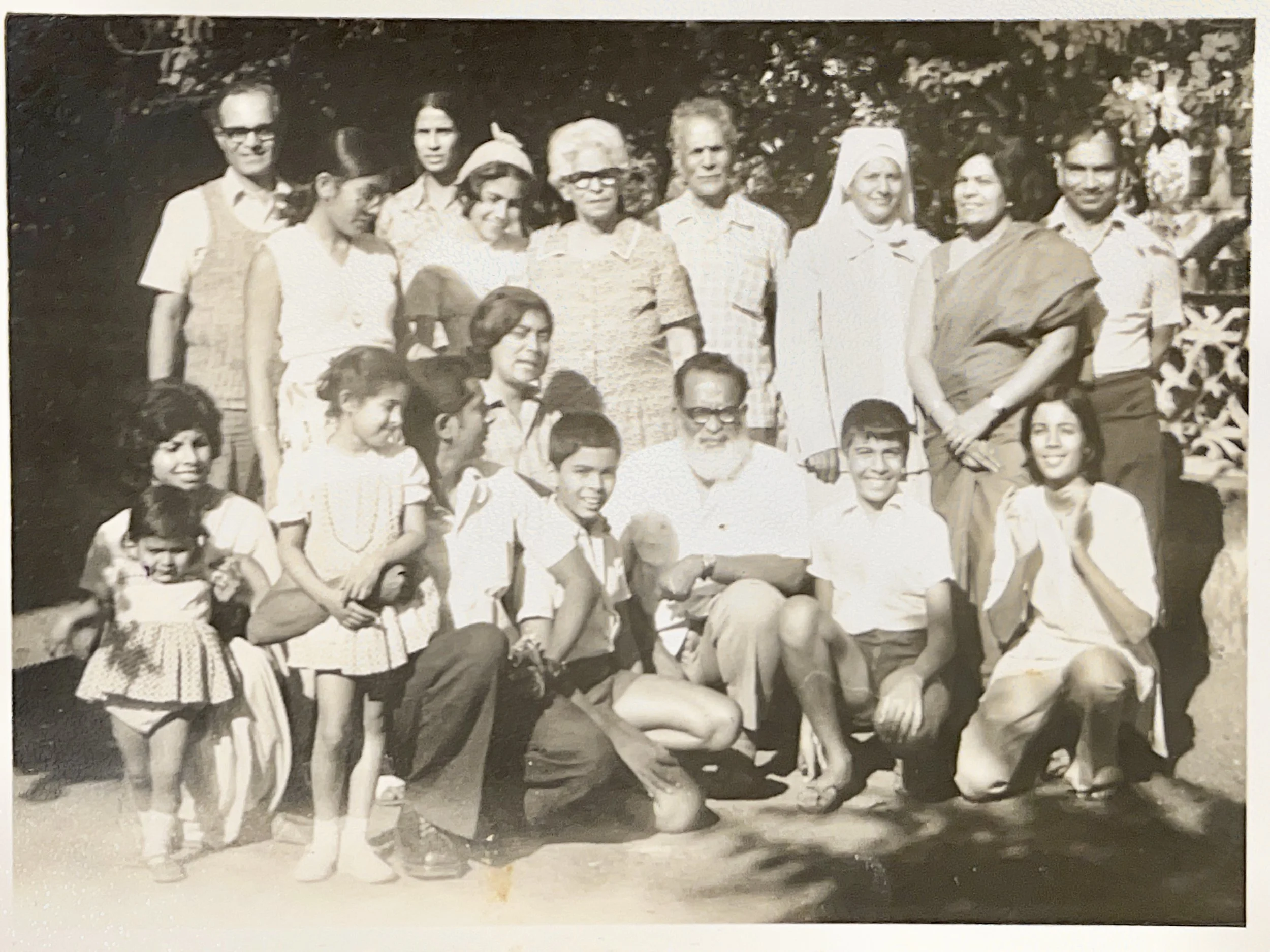
I have many fond memories of Christmas at Castellino Flats, as in the 70s, our annual family Christmas lunch was hosted at my grandparents’ home there. My grandmother was a gourmet cook, and we looked forward to her famous sorpotel, pork vindaloo and stuffed roast chicken, rich date and walnut cakes and many traditional Goan Christmas sweets. Excited for the good food, meeting aunts, uncles and cousins who came to Poona from across the country and the world and most importantly the Christmas presents that were distributed and opened after Grandma’s grand Christmas lunch. The other after lunch D’Lima tradition was to all line up pose for the family Christmas photo on the road outside Castellino Flats. I have a treasure of these sepia photos with the year pencilled in at the back in Mummy’s or her sister our dear Aunty Dorcy’s handwriting, documenting us growing up.
This Christmas lunch tradition continues in Pune. The responsibility passed from Grandma to Mummy to my sister Ingrid, who is now a grandmother (all responsible oldest sisters). Our extended family continues to travel from across the country and the world to be together and relish the sorpotel and roast chicken. We have some healthy salads too. Adults and kids alike all look forward to opening Christmas presents after lunch.
This year I will take some special Siolim sannas for our lunch and my niece Mithika (my sister Ingrid’s daughter) will bring Christmas crackers from London. We still take our family Christmas photos. They are now in colour, taken on a phone and posted on socials!
Michelle Mendonça Bambawale is the author of Becoming Goan: A Contemporary Coming Home Story (Penguin; 2023). Her recent work appears in the anthology, The Brave New World of Goan Writing & Art 2025 (Cinnamon Teal, 2025) and is forthcoming in a Goa-related anthology published by Penguin.
Banner image by Ryan Grice downloaded from Unsplash.com