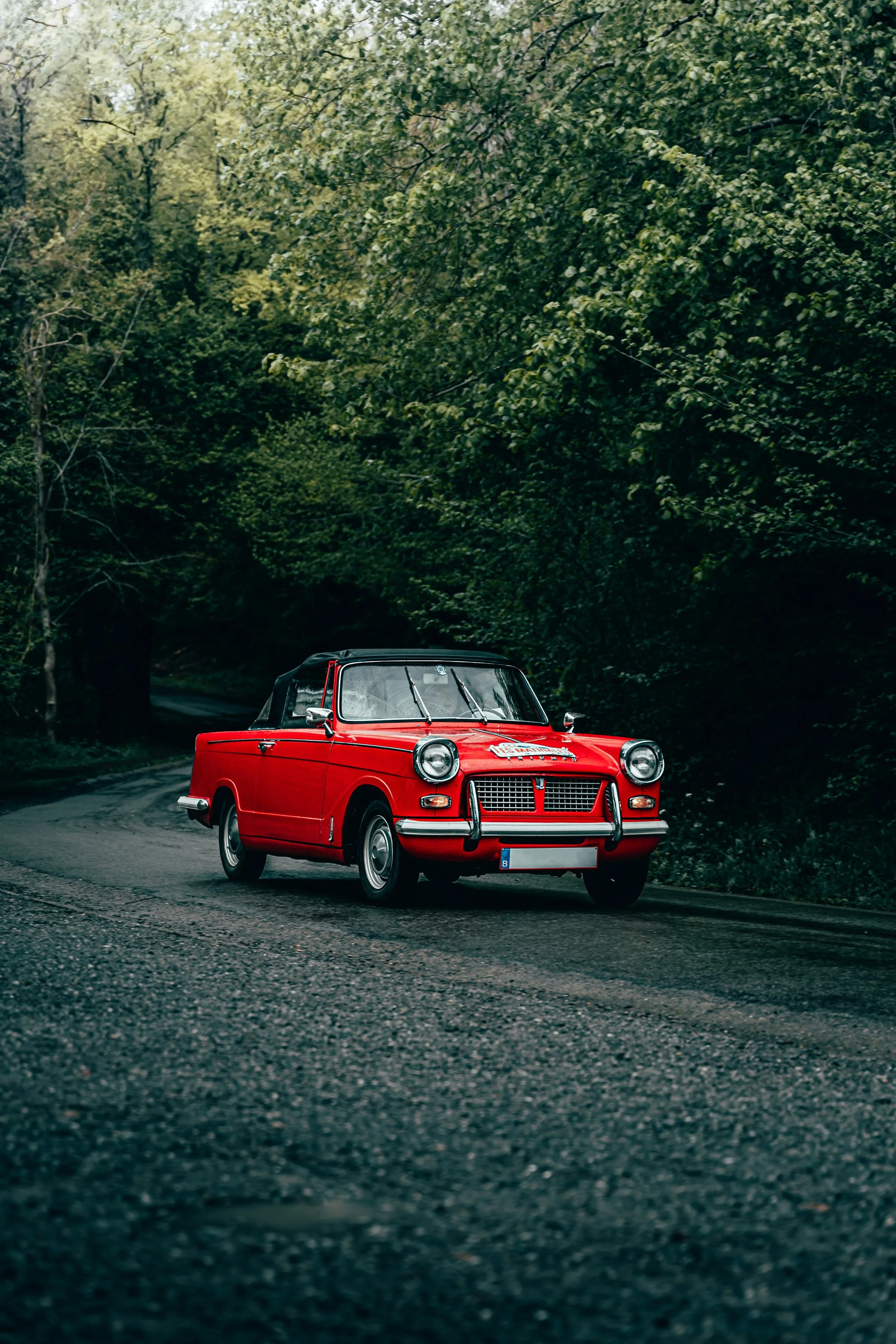
“The route, which ought to have been familiar, Panjim to Margao, a line drawn a hundred times in memory had become something else entirely. A roundabout appeared twice. A petrol station blinked past and then returned, at some point they crossed the Zuari bridge, but the water beneath was black glass. “I think we’re going backwards,” Seby said, apropos of nothing, one arm hanging out the window like a flag of surrender.”
By Nilankur Das
You had to be mad to take the pills and the syrups the way they did, deliberate madness. They weren’t chasing a high, they were trying to fall off the edge of the world, strip after strip of Spasmo Proxyvon, swallowed dry, Corex syrup guzzled warm and metallic, a haze of Benadryl and the white pill, Nitrazepam. Their blood thinned into syrup, their eyes rolling back until they could see their own skulls, pupils wide like holes punched through paper, called it “adjusting the volume on reality”.
The car was a Maruti 800, red, with rust near the wheel like a persistent rash, and it had been rented by Seby at 8 AM through his elder brother’s friend’s acquaintance who ran a modest tourist car rental business, and Seby said he would return it by noon, in four hours; the sort of promise made when the sun is still gentle, but promises age badly under Goa’s heat, and by the time they rolled into Panjim, everything was softer, the edges of streets, the clarity of sounds.
They parked the car near a pharmacy, a small square room lined with cardboard boxes and dusty glass cabinets, they entered for replenishment, for the rustle of strips of tablets and the clink of glass bottles, and when they came out, one car had become two, identical twins separated by circumstance and reunited by accident, or perhaps by fate, if one believes in such things, the second Maruti 800, red, rusted, sun-faded, stood a few feet away, and Seby, who was driving, always Seby, always him, laughed and said, it’s ours, and Datta shrugged.
The key turned easily, because that was the nature of things back then, in 1990’s, keys were more suggestion than command, and car responded with loyalty, and no one noticed the cassette player was different, or that the axle growled in protest, they drove off, as though it were the most natural thing, not going back to return the rented car as promised by noon, past buildings that pretended to belong in Europe, past sleepy roundabouts and peeling posters, toward Galgibaga where the sand whispers, and the sea holds its breath longer.
The owner of car, the one now missing, driven by two boys with bones made of chemicals and hearts full of forgetting, did what any man in 1990s Goa would do, he filed a police complaint, terse, bewildered, and slightly embarrassed, because who gets their car stolen in broad daylight, and yet the officer at the desk did not laugh, he had heard worse, and so a file was opened, notes were taken, and the machinery of justice, deeply practiced in violence, began to creak into motion.
The car, the rattling red Maruti 800, was in motion by then and Panjim peeled away, shop by shop, until there was nothing but the road and their pulse and something else, something just under the skin of the day, twitching.
Seby was at the wheel; the taste of rum, weed, and cough syrup still coating his tongue like glue, eyes open too wide. His foot jerked between brake and accelerator with a rhythm that had nothing to do with traffic and everything to do with panic barely repressed. Datta sat in the passenger seat, rigid, hands in his lap like a student waiting to be punished, scanning the horizon for signs that they hadn’t slipped fully out of reality, though he already knew they had.
There was something about the way the coconut trees leaned that day. As if they were trying to see inside the car. As if they remembered these boys from somewhere.
The route, which ought to have been familiar, Panjim to Margao, a line drawn a hundred times in memory had become something else entirely. A roundabout appeared twice. A petrol station blinked past and then returned, at some point they crossed the Zuari bridge, but the water beneath was black glass. “I think we’re going backwards,” Seby said, apropos of nothing, one arm hanging out the window like a flag of surrender.
“No” Datta replied, “we’re just not going forward.” That was enough sense for them.
The road dipped. Then rose. Then dipped again, more like breath than geography, and a dog began to follow them on foot, for kilometres, its eyes luminous, tongue lolling with a smile too human. It barked only once, at a point when Seby almost turned into the wrong lane, and then it was gone, as if it had completed whatever its role had been. Maybe it had warned them. Maybe it had ushered them in.
In the villages they passed through, Loutolim, Borim, Raia, the lights seemed to flicker just after they passed, as if the car pulled something from the wiring of the world itself. No music played, though Seby kept fiddling with the cassette player, convinced something should be coming through. He said he could hear a woman singing in the static. Then, a man crossed the road carrying a rooster under his arm, both of them staring directly into the them, unblinking, not moving faster, just moving through. And for a moment, the engine stalled. Then restarted. Then the car continued, as though unsure what reality to return to.
And it was only when they reached the outer edges of Margao that the world began to stitch itself back together.
Buildings returned to their proper angles. Roads obeyed the laws of physics. Pedestrians no longer glided. But the boys were different now, high, but quieter somehow, as if a part of them had been extracted during the drive and placed elsewhere. Seby was giggling again, sure, but there was an echo to it. Datta’s eyes twitched every time he saw his own reflection, kept glancing at number plates, convinced he’d seen the same one five times, maybe more.
By the time they reached Margao, the light had shifted again, turning buildings into shadows and they, dazed but functional, wandered into Longuinhos, for cold meats and soft drinks, and the laughter came easy, Seby’s eyes glazed like old marbles, Datta giggling without knowing why.
The glass of the restaurant shimmered like water. The sunlight outside, no longer gold, but acid yellow, burned through the slats of the window blinds and made stripes across the linoleum table where cold meats sweated under congealed fat. The boys sat there like wax figures melting into their chairs. They hadn’t spoken in fifteen minutes. They didn’t need to. Their silence was communal, like a séance.
Seby’s fingers twitched as he pulled bits of pork apart, methodically, as if he were dissecting something that had once been alive in his mind. He wasn’t tasting anything anymore. Taste had left him around Panjim, replaced by the metallic sting of codeine and chemical backwash. His throat was raw, like he’d swallowed steel wool. The Corex he chugged behind the pharmacy was beginning to spike, his limbs floated and spasmed at once, heartbeats skipping beats, then galloping.
Datta stared at the Coca-Cola glass in front of him like it was some ancient omen. He could hear the fizz hissing in his ears, and it sounded like someone whispering secrets he didn’t want to know. His right hand was shaking. Or was it his left? Or both?
Outside, dusk yawned open like a wound. Seby, his pupils were pits of tar, sucking in what little light was left in the day he stood, muttering something unintelligible, and jingled the keys, keys he thought were his, keys that belonged to another world.
“Let’s bounce,” he said. Voice slow. Slurred. Tongue too heavy.
Datta followed, legs stiff. Stomach turning. He thought he heard his own mother’s voice in the sound of a nearby scooter engine.
And then;
“Stay where you are!” The voice sliced the air open.
Seby turned and saw a man, no uniform, but the stance was enough. Police. Two more emerged, one from the alley, another from the direction of the petrol pump. Plainclothes, but their faces held that look: the one that knew power, and liked using it.
“Hands on the car.”
Seby blinked. “What?”
He didn’t understand. Or maybe he did, in that deep, buried part of his brain that had been screaming since Panjim. He took one step back, clutching the Maruti’s door handle, and then it came.
A fist to the side of his face. A knee in his gut. He folded like laundry.
Datta stood frozen. Not quite scared. Not quite conscious. He felt his bladder twitch. He thought he heard dogs barking. Thought he saw his childhood home.
The officers slammed Seby onto the bonnet. The metal was still warm from the sun. His cheek seared against it. Someone shouted at Datta. He didn’t respond. Another slap, sharp, ringing. His ears filled with pressure.
They were thrown into the Police Jeep. The seats smelled of sweat and rust. Seby sat slumped, head tilted, bleeding from his nose. His jaw hung open slightly, drool pooling on his collar. One of his legs twitched involuntarily. His lips moved, maybe forming a word, maybe not. In his pocket, wrapped in silver foil, were three more white pills and half a strip of blue Proxyvon. He thought of swallowing them all. But his tongue wouldn’t work. Datta’s teeth chattered, his body had decided to shake on its own.
In the Police Station, the walls were damp with silence, the dense, humming silence that comes before a scream. The station smelled of rust, piss, and the ghost of old brutality, tube lights flickering above like they were afraid of what they had to witness.
Seby and Datta were dragged in, arms pulled taut behind their backs. Seby’s shirt was soaked, part blood, part sweat, part something else. Datta was quieter now, his brain floating just beneath his skull, like a jellyfish pulsing in a too-small tank. He could barely hear the shouts around him. The world moved in stutters. The walls seemed too far and too close at the same time.
“On the table!” barked one of the constables.
The table was a monster, wooden, scarred, legs reinforced with metal bands. Its surface had been scrubbed too many times with bleach and not enough with conscience. It had held bodies before. It would again.
Seby didn’t resist. He couldn’t. They bent him over it, tied his wrists to one leg, ankles to another. His belly was pressed into the splinters. His face turned to the side, eyes wide but unseeing.
Datta was thrown onto the floor, propped against the wall. One constable kicked his thigh to see if he’d flinch. He didn’t.
The cricket bat came out. Electrical tape wrapped around the handle. Bits of cloth tied to the end to keep blood from splashing back. It wasn’t the first time they’d used it that week.
The first blow landed squarely on Seby’s calf. A crack. A dull, wet thud. His leg spasmed. No scream.
“Talk!” one of them shouted, though no one knew what they were supposed to say.
Seby’s mouth opened. A gurgle came out. A half-swallowed name. Or maybe just spit.
They beat him again. And again. Thigh. Back. Buttocks. Knee. Flesh gave way. Then came the shaking. Then the void.
His trousers darkened. First with sweat. Then with blood. Then something else, thick, oozing, shameful.
“Shat himself,” muttered a cop. The others stepped back, noses wrinkling. One went outside to light a cigarette.
Datta began to cry, not loudly, not like a boy crying for help but like a man crying without realising it. Silent tears. Slow tears. The kind that don’t wash anything clean.
He whispered, “He’s not even awake,” but no one listened. Because it wasn’t about Seby. Not really. It was about the cops. About what they’d become.
Constable Pednekar, paused as he rubbed his hands clean with an old towel. He looked at Seby’s body, crumpled and twitching, and something flickered in his eyes, not guilt, but memory. His own son, same age, had been caught stealing a scooter two months back under influence. He got him off the hook, of course. Bribes and connections. But he remembered the way his son cried when he slapped him. Not out of pain. Out of betrayal. He looked at Seby now and saw that same look.
Another cop, Desai, muttered under his breath: “These boys…they’re not even really here, are they?”
“They’re gone,” someone else said. “Not boys anymore. Just chemicals with skin.”
And that was it. That was the real crime. These weren’t just thieves. They were the rotting edge of everything they hated, drugs in villages, lost youth, no fathers, no futures. What they beat wasn’t Seby. It was a ghost they couldn’t catch. A future they couldn’t fix. So they beat harder.
But Seby didn’t feel it. Not all of it. Not really. Each hit landed on some version of him he had left behind in Siolim, where he imagined the sea was still calling. His mind looped broken images: a coconut tree bent in half; a girl’s face from three years ago; the first time he ever tasted Corex and realised the world could be muffled. His body convulsed again.
Datta, watching, realised this was the punishment for a mistake they didn’t even know they had made. That this wasn’t justice. This was theatre. Their arrest was just the opening act. The beating - the play. The aftermath? Silence.
Later, they dragged Seby, barely breathing, limbs heavy like sandbags, into the lock-up. They shoved Datta in beside him. Two more men were already inside. One snored. One stared. No one spoke. The cell smelled worse than the rest of the station. Like something decomposing very slowly.
The cops asked them for a number, a name, someone who would come. “Anyone who’ll come for you,” they said. Datta gave his cousin’s number in Colva. Didn’t even remember how. The digits fell from his mouth like ash.
The cousin arrived without tears and with strategy, and folded notes and the kind of pleading that makes things happen, and by midnight, Datta was walking out, half-conscious, into a world that still somehow belonged to him.
Two FIRs followed for Seby. One for the car taken in Panjim, one for the original rental from Siolim, and though the substances were obvious, they were never mentioned on paper. His family, ashamed and desperate, paid what they could, argued for his future, though futures are not always something one can purchase. Six months. That was the sentence.
And that’s how the story keeps ending, every time someone in Siolim says, remember those two, and someone else says, yes, the car boys, and someone else says, it wasn’t even their car, and someone else says, that’s not the point, and then silence.
Because everyone knows how the story goes, but no one remembers how it began. Or whose car it really was.
At the Museum of Goa, Nilankur curates programs that cut too close. He encourages people to think, to squirm, to react. His events are interactive experiences to prompt better questions, most importantly, to not to look away. He is interested in shades of truth. Even if it bleeds. He is a columnist at O'Heraldo newspaper and contributes to various publications.
Banner image by Jonas Jaeken downloaded from Unsplash.com