
By Selma Carvalho
Renuka Chatterjee is a veteran of the publishing industry having previously held senior editing and commissioning posts with Penguin India (now Penguin Random House) and HarperCollins in India. She then curated Speaking Tiger’s list of authors for eleven years as vice-president, publishing. In 2026, she heads her own publishing house Cinnabar Press in collaboration with commissioning editor Rinita Banerjee formerly commissioning for Harper-Collins, and Aashna Malhotra, a third-generation bookseller of the illustrious Bahri booksellers.
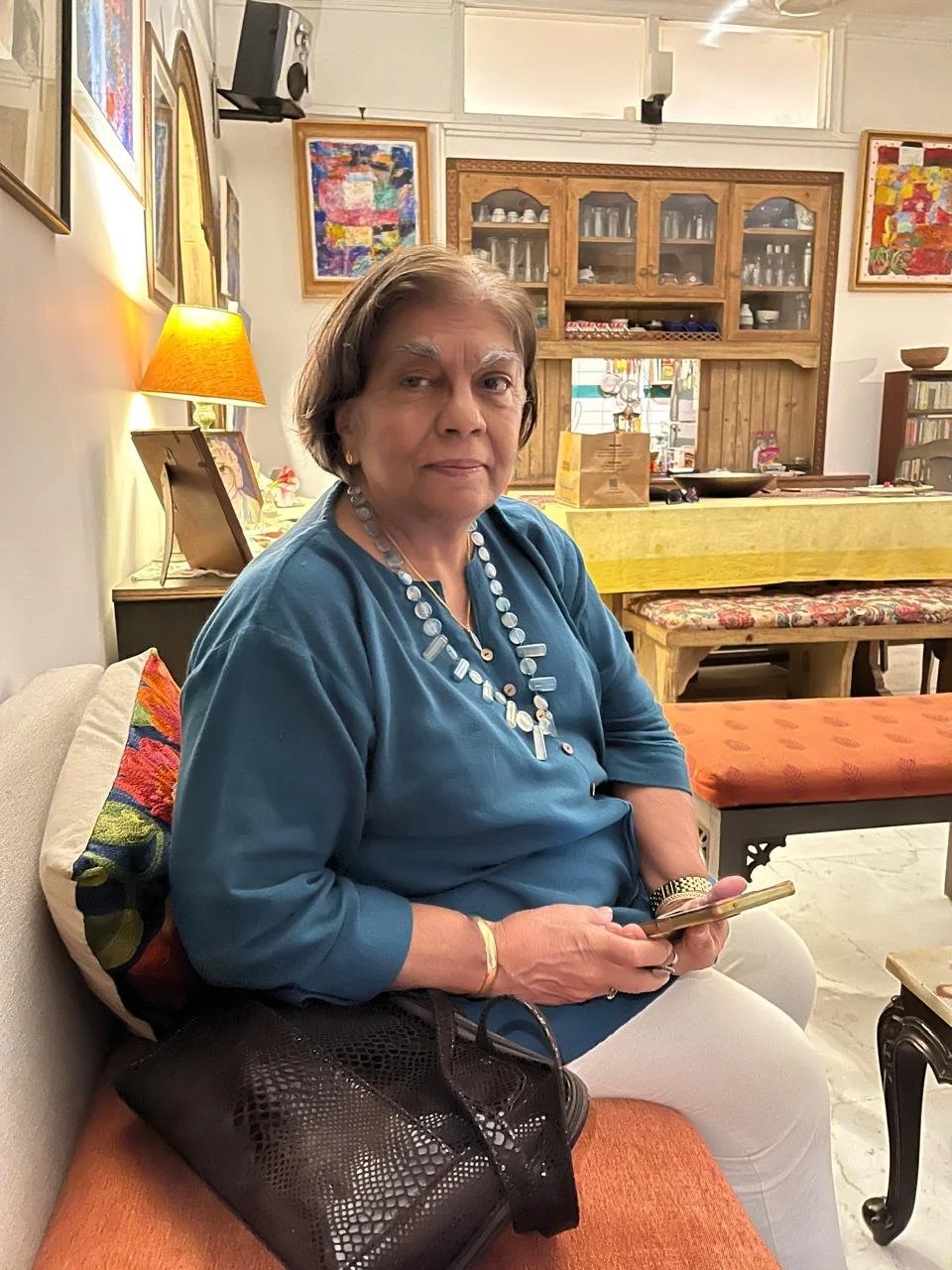
SC: Tell us what your ambitions are for Cinnabar Press.
RC: We would like this to be a very focused, selective list where we’re not looking at numbers but only at books we truly like and believe in. We intend to do just 12-15 titles a year, at least for the foreseeable future. Which doesn’t mean we’re not looking at numbers as far as sales figures go — but hopefully, Rinita and I, with our collective experience in publishing, will pick books that are good, and will also sell. But we’re not going to do a whole lot of genres — our focus is fairly and squarely on narrative non fiction, and literary — and some good popular – fiction.
SC: You will be signing up writers for Cinnabar Press. The list of acclaimed authors you have previously worked with include Patrick French, William Dalrymple, Vikram Seth, Amitav Ghosh, Nayantara Sahgal, Swapna Liddle and Zac O’Yeah. Tell us about the sort of writing that excites you and what you will be looking for as you curate the list for Cinnabar Press.
RC: In fiction, a strong and clear storyline, characters that are real enough to step off the page and be in the same room with you, like people you could actually meet — and an original voice. In non-fiction — the subject, of course, and the depth of the author’s research and knowledge.
SC: India is a country of over one billion people. Yet, the market for Indian writing in English remains remarkably small. A sale of 5000 books is considered a best-seller. What, in your opinion, accounts for the low numbers in sales: distribution, lack of a reading public, lack of author visibility?
RC: When people cite this figure of one billion people, they forget that only a very small percentage of them actually read or write in English, unless they have to, for professional reasons. The vast majority read in other languages. The last I checked, it was around 2 million people who read in English. Still, that is a large number, and certainly, should be able to do larger print runs than 1000 or 2000 copies, which is the average. The main problem is distribution, and we need more bookstores across the country, and not just in metro cities. But I don’t agree that we don’t have a reading public — we do, it’s just that people, especially the younger generation, are reading on their phones or iPads, and buying books online.
Incidentally, a sale of 5,000 copies is considered pretty good even in the UK, US and elsewhere!
SC: What could improve the public’s interest in reading—libraries, school reading lists, literary prizes, perhaps?
RC: I think we have enough literary prizes, and more coming up all the time. That actually creates a bit of a problem, because it’s the same books that keep getting nominated for all the prizes, so people think those are the best books published in that year — while others that may be better, get ignored! But a stronger library network — and more than that, a library movement, which would encourage people to go to them, would certainly help. Yes, schools should also encourage young people to read, through reading assignments, quizzes and competitions, perhaps.
SC: Please give us your best advice for authors who will be submitting to you to have their books published.
RC: As we are a new imprint, we’re not really encouraging unsolicited submissions right now, we’re picking and choosing our authors ourselves, or developing ideas. But if someone does want us to look at their work, they should first of all keep in mind what we’re not publishing — fantasy, sci-fi, self-help, children’s books, poetry, business, academic work—and send us a proposal for only what we are doing, which is, as mentioned, narrative non-fiction and adult fiction. Just a synopsis and a couple of chapters. If it interests us, then we’ll ask for more material.