“This form is not merely aesthetic. It is political. It is ethical.”
Vithai Zaraunker in Interview
with R. Benedito Ferrão
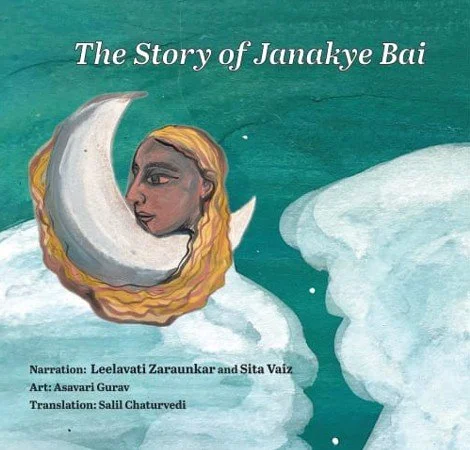
The illustrated book The Story of Janakye Bai (Goa 1556, 2026) chronicles a tale that has been passed down over several generations amongst Velip people, one of Goa’s Indigenous communities. The story revolves around Janakye bai, a girl who chooses to run away from home rather than resign herself to a fate she refuses to accept. This book appears in two editions, one in Velip Konkani and the other in English. Vithai Zaraunker, a member of the Velip community and an Assistant Professor of Women’s Studies at the D. D. Kosambi School of Social Sciences and Behavioural Studies at Goa University, envisioned this book project which records the story of Janakye bai as narrated by Leelavati Zaraunkar and Sita Vaiz. Salil Chaturvedi translated the tale, which has been illustrated by Asavari Gurav.
As Zaraunker explains in her introduction to the book, The Story of Janakye Bai emerges from a project titled “Old Songs, New Stories: Tales from the Velips of Goa,” which was sanctioned by Sangeet Natak Akademi, New Delhi under the programme for Safeguarding the Intangible Cultural Heritage of India. In 2014, Zaraunker participated in this mission as an independent researcher under the guidance of the late Professor Alito Sequeira of Goa University. This gave Zaraunker the opportunity to document the story that would become this illustrated book.
The development of the book occurred in a joint venture instituted by Goa University and Japan’s Konan University. Professor Kyoko Matsukawa who teaches at Konan created a consultancy that would allow Zaraunker to produce the book as part of the scheme, Anthropological Research on Education and Voicing of Self-Narratives and Multi-Media in Goa. Indeed, this anthropological approach and multi-media focus are mirrored in the book which, aside from the illustrated narrative, contains QR codes that allow readers to listen to recordings of songs associated with the oral tradition from which the story arises.
The Story of Janakye Bai highlights the importance of storytelling and oral tradition in Velip and other indigenous communities, not only for cultural and linguistic reasons, but also to challenge conceptions of tribal identity and ideas of what constitute Goanness. These are some of the matters Zaraunker considers in this interview.
RBF: I am assuming that you grew up hearing of Janakye bai from the time you were young. What is your first memory of this story?
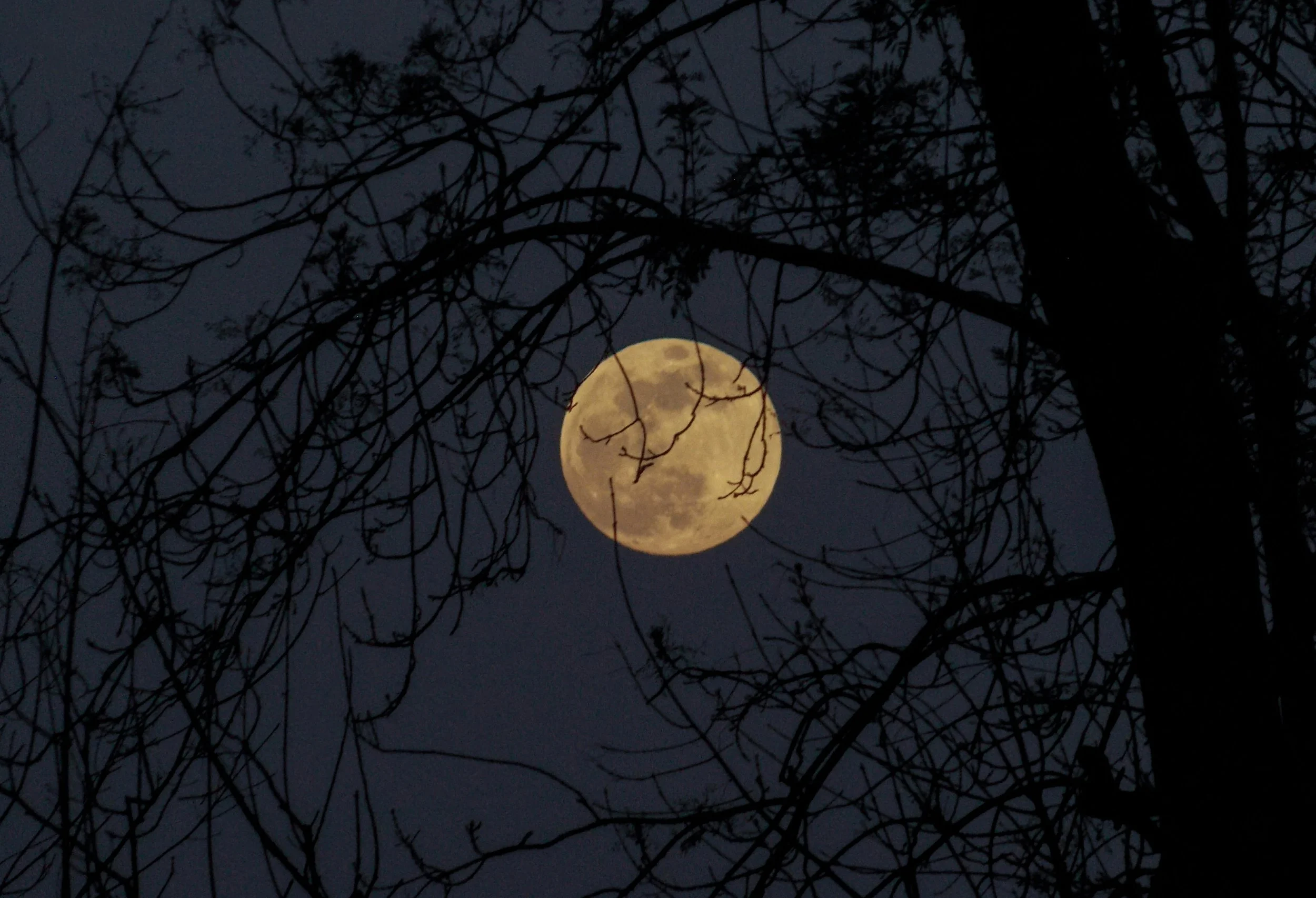
VZ: Yes, I grew up listening to this story. My mother Leelavati Zaraunkar narrated it to me as a child. At the end of telling me the story she used to say, “Look Janakye bai is there on the moon.” This is my first memory of the story.
RBF: In your introduction to the illustrated book, you explain how you first chronicled the Janakye bai story as part of the anthropological project “Old Songs, New Stories: Tales from the Velips of Goa.” This was an academic study and you are also a researcher and professor. Yet, in this iteration, the tale of Janakye bai is relayed to us in the shape of an illustrated text, one that “translates” its orality into writing while adding the visual element of pictures (along with a way to hear the songs that are traditionally part of the telling of this story). Why this form and who are the audiences you hope it will reach?
VZ: I am hoping to reach the Indigenous community, young people especially. Many members of the community may not be comfortable with formal academic writing. Some do not read or write fluently. I wanted the story to be accessible even to someone who simply turns the pages and looks at the images. The visual element allows the narrative to be understood beyond the barrier of literacy.
For instance, when I showed the book to my mother, Leelavati Zaraunkar, who is one of the narrators of the story as it appears in the book, she immediately connected with it. She recognised various scenes from the tale through the illustrations. She could relate the images to the oral story she carries within her memory. That moment confirmed for me that this form was necessary. The book was not alien to her; it spoke to her.
The inclusion of illustrations and the possibility of listening to the songs helps keep the essence of the performative and oral dimensions of the story. It does not treat the oral narrative as something to be “fixed” in text alone. Instead, it attempts to translate orality into writing while still respecting its rhythm and visual imagination.
Today, many young people from the Velip community are distanced from oral traditions. Due to stigmatisation and discrimination, tribal identity is often perceived negatively by non-tribal communities. Oral traditions are treated as primitive or backward. As a result, youngsters feel that learning or listening to these stories is not valuable.
I speak from experience. Growing up, I faced discrimination within educational spaces because of my language, social background, and community identity. I was repeatedly made to feel that the way my community dressed, lived, or spoke was inferior. I learned very early on how to remain silent, how to blend in, and how to hide my identity in order to survive in educational institutions. It was only during my postgraduate studies, when I encountered concepts like othering and orientalism, that I understood these experiences were not personal failures. They were outcomes of dominant knowledge systems that construct certain identities as inferior. That realisation changed how I looked at my community. I began to see my community not as one that is lacking knowledge, but that is rich in its own systems of wisdom, values, and lived histories.
This illustrated book is therefore also an intervention. It tells young people: your stories matter. Your language matters. The way you speak, the way you sing matters. Your identity is not something to hide. By presenting the story in a visually engaging and accessible form, I hope young people from my community can see their traditions and themselves represented with dignity.
At a time when these oral traditions are on the verge of extinction due to stigma and discrimination, the book becomes a bridge—between generations, between orality and print, between community and academia. So, this form is not merely aesthetic. It is political. It is ethical.
RBF: “The Velip language has been spoken for a long time … in Goa … Our language is also Konkani, but it has no status among the various Konkanis … Our Konkani is not known as Konkani but as a ‘tribal dialect,’” you underscore in your introduction.
Much has been made politically about Goan identity and its connection to the status of varying forms of the Konkani language, especially with regard to the differing official categorizations of Romi versus Nagri tongues and scripts. So also, when it comes to literary expression in Goa, there is a contentious history of the sidelining of Romi-scripted works, most notably in how the state chooses to render its support.
In the midst of this, what you point to is how Velip Konkani does not even factor into such debates when the language is dismissed as being a “tribal dialect.” If on the one hand efforts like The Story of Janakye Bai demonstrate diverse types of literary and linguistic traditions in Goa, on the other hand, it also draws attention very specifically to the stigmatization of Goan tribal identity and its representation.
This brings up two questions for me. The first is what might a project like this, one that comes from the community itself, do to counter the marginalization of Velip people and other Indigenous Goans? And the second question has to do with the book being produced in two languages: what does translation do to expand upon how Velip identity may be represented and preserved?
VZ: I would like to begin with the first query. We must first ask: how have Indigenous people been constructed through literature and scholarship? For a long time, mainstream scholarship has defined us as backward, primitive, illiterate, and without knowledge. Our struggles, our resistance are rarely recognised. When our knowledge systems are acknowledged at all, they are often reduced to “folktales,” stripped of their political, historical, and epistemic depth.
The Story of Janakye Bai directly challenges this dominant portrayal of the Velip community as silent, passive, or voiceless. We are not voiceless. We are not silent. What exists is a failure of dominant scholarship to listen, and a failure of academic systems to take Indigenous narratives seriously. This work was guided by critical questions such as: Why have stories like the one about Janakye bai never appeared in scholarly writings on the community? Why do such narratives remain confined within the community, even though the community itself has been extensively researched? Why are stories of exploitation absent from academic records? Why have histories of Indigenous resistance consistently not been recognised? Why are tribal knowledge systems dismissed merely as folklore?
When a project like this comes from within the community, it speaks to lived experience rather than about it. That itself becomes a powerful counterpoint to marginalisation.
I now come to your second question regarding translation and the book being produced in two languages. The translated version is meant for readers who may not understand Velip Konkani. It enables tribal literature and knowledge systems to reach a wider audience—academics, policymakers, students, and readers beyond the community. Translation, in that sense, becomes a bridge. It expands visibility and invites recognition. At the same time, publishing the Velip Konkani version is equally, if not more, significant. In dominant discourse, Velip Konkani is dismissed as a “tribal dialect.” It does not even enter debates about scripts or linguistic status in Goa. It remains invisible within conversations about identity and language politics. Bringing out the Velip Konkani version is therefore a political move.
The mainstream may marginalize Velip Konkani, but I see the sustenance of the language as an act of resistance. Printing it, preserving it, and circulating it affirms its legitimacy. It tells young people in the community that their language is worthy of print and worthy of intellectual respect. A book like this dignifies the language and expands the representation of the Indigenous communities of Goa. This project thus challenges the structures that have marginalised Indigenous communities in Goa.
RBF: This book has many components: the gathering and synthesization of assorted narrations of the Janakye bai story, illustration, translation, and the inclusion of songs via QR codes. How long did it take to make all this happen? What challenges did you face in the process?
VZ: A primary concern was about adequately representing the community with respect while keeping in mind the existing stereotypes about the community. With this in mind, I adopted a different approach, especially in how I wanted the illustrations to be produced. Since I know the Velip community is embedded in nature, I wanted the illustrations to reflect this. Working with the illustrator, I ensured that the illustrations would represent the way we are and the way we see ourselves rather than how others see us stereotypically. This required continuous engagement with the artist so as to deconstruct notions and ensure that the way the illustrations were done would counter the marginalization of Indigenous people. I had many challenges when I was working with the artist as they had their own perception about the community.
QR codes are included so that readers can hear the songs alongside the story. When one listens to the songs at the same time as they read the lyrics in the book, there is a difference. The character shift or addition or deletion of details happens in each telling depending upon the mood and environment of the storyteller. Therefore, oral traditions cannot be fixed in written form. To make people know and understand their importance, the QR codes allow readers to listen to the songs.
Translation was not an easy process, though. This work was translated through the use of a third language, which in this case was Hindi. The work was translated by Salil Chaturvedi, who does not know Konkani. Hence, the work was translated by Salil and me: we would sit together and, first, I would translate each word into English and then translate entire paragraphs or songs into Hindi for Salil. In turn, he would translate the Hindi text into English.
Before Salil, I had tried working with a person who knows Konkani. However, this translator could write and speak standard Konkani, but not Velip Konkani. Because this person was not familiar with Velip vocabulary, the whole meaning of a sentence would change. In one instance, the work “nagn,” which means marriage, was translated as “naked.” So, as I discovered, sending the content to someone who does not know Velip Konkani could lead to misinterpretations. Thus, translation was the biggest challenge. It took us almost a year.
RBF: I want to come to the text itself. Incest, as your introduction declares, is central to the Janakye bai story but, of course, it is not something exclusive to any community. The book deals with this issue very carefully through a feminist perspective. I see the story as offering girls and women a viewpoint that challenges patriarchy and not simply accepting things just for the sake of maintaining peaceable relations at home. At the same time, this must have been a delicate matter to consider. How has the book been received by the community?
VZ: Yes, of course the story had to be communicated with care because it is about incest. Before someone reads the story, as already declared in my introduction, the story is about incest and the Velip community resists incest. Incest is seen as a sin in the community. Janakye bai therefore is a symbol of resistance. Her story is a message to young girls about how to uphold their dignity, regardless of who they may have to contend with. Even if it is your family, you have the right to choose and you are an agent of your own life. When your freedom is in danger, you have every right to resist.
This book has not yet reached the community widely. I have not gotten any reaction to the question that you have asked about how the book has been received by the community. It will take time to learn this. However, I have received feedback from young members of the community with whom I shared an interview that was done with me about the book and that was published in The Navhind Times (23 January, 2026). Based on the interview, many of the educated youth from my community said they thought this was a great effort.
RBF: Late into its development, Janakye bai transforms into a member of the Mhar community so that she may visit her family. This is very striking because a celestial being allows her the opportunity to take on any form of her choosing but, even so, she deliberately asks to become a Dalit person rather than someone of a higher caste or status. There is an equation here between communities—tribal and Dalit peoples. What should readers make of this likening of Goa’s marginalized communities?
VZ: First, it points to an important social reality: tribal societies do not have caste divisions in the way caste society does. The very idea of caste order is something that tribal communities historically did not practise; rather, it was learned and imposed through continued interaction with caste-based society. Janakye bai’s transformation makes evident this division and, at the same time, critiques how caste enters and restructures social life.
Second, Janakye bai’s choice to become a member of the Mhar community can be read as an acknowledgment that tribal and Dalit lives—while shaped by different histories—share similar experiences of exclusion, and marginalisation in Goa. The story identifies that everyday experiences of discrimination, exploitation, and social humiliation are not isolated across the tribal and Dalit communities.
The likening of tribal and Dalit identities in this moment is therefore not accidental. It is a powerful statement that oppression does not function in separated categories. Instead, these are overlapping social realities. The story reminds readers that marginalised communities are often divided and classified differently by dominant systems, even when their lived situations are connected.
In that sense, the narrative offers a message both to readers and to the communities themselves: oppressed castes and Indigenous peoples should not be seen as essentially disconnected. Their struggles interconnect, and recognising this shared ground opens up the possibility of unity rather than division.
Janakye bai’s choice, even when she is free to assume any form, becomes an ethical and political gesture. It affirms self-respect in identities that dominant society devalues, and it challenges hierarchies that place some lives above others.
RBF: Finally, what is next for you? Will you be doing more work with Velip oral culture?
VZ: Yes. I have transcribed more than ten stories from the community so far. These stories are not merely stories but, rather, are the knowledge system of the community. I say this because when there was no formal school available for the children from the community, these stories were used to communicate moral values, freedom, and agency to the children. Hence, according to me, we do not get knowledge only from schools or educational institutions—we also get knowledge from our elders and communities.
R. Benedito Ferrão is an Associate Professor of English and Asian & Pacific Islander American Studies at William & Mary, Virginia, USA. He is the recipient of the Jinlan Liu Prize for research in APIA studies and a University Professor for Teaching Excellence.
The book is available for purchase here.
Banner image by Aaron Visuals downloaded from Unsplash.com