S.M. Visakh
Monsoon has a prominent place in Indian life. Varsha or rain has been the backbone of agricultural prosperity. Indian mythology celebrates the victory of Lord Indra, the God of rain, over Vritra, the demon of drought. Mahakavi Kalidasa in his work Megaduta tells the story of a yaksha (nature spirit) from Central India requesting a cloud to carry his message of love to his wife in Alakapuri in the distant Himalayas. In Hindustani music, there is a raga, Megh Malhar, which is reputed to have the power to bring rain. There is a legend of Tansen, the renowned Hindustani musician, bringing rain by the use of Megh Malhar.
India receives rain through the summer monsoon and winter monsoon. The summer monsoon brings rain to the west coast, central India, eastern and northeastern India. A glimpse of this monsoon season in the western coastal states of Keralam, Karnataka, and Goa gives a picture of the multitude of ways in which social life and natural environment here are shaped by monsoon.
It is raining incessantly. Children, some holding umbrellas, some in raincoats, and some even drenched, are on their way to schools. This is one of the timeless moments of monsoons in Keralam. The South-West monsoon, also called edavappathy in Malayalam, arrives in Keralam usually on the first week of June when schools reopen. The monsoon, which lasts from June to September, is days of festivities, and spiritual, mental, and physical rejuvenation. The south-west monsoon is chakara time for the fishing community. Chakara or mud bank is a natural phenomenon that occurs along certain parts of Keralam’s coastline, especially in Alappuzha district during the monsoon period. Mud banks are formed of thickly suspended sediments in a semicircular shape along the coast. Since the seawater in this region is calm, the mud banks serve as natural ports for the fishing boats. The fishing community have a rich harvest as plenty of fish arrive at the outskirts of this region. The heavy rains also bring with it hardships for mind and body.
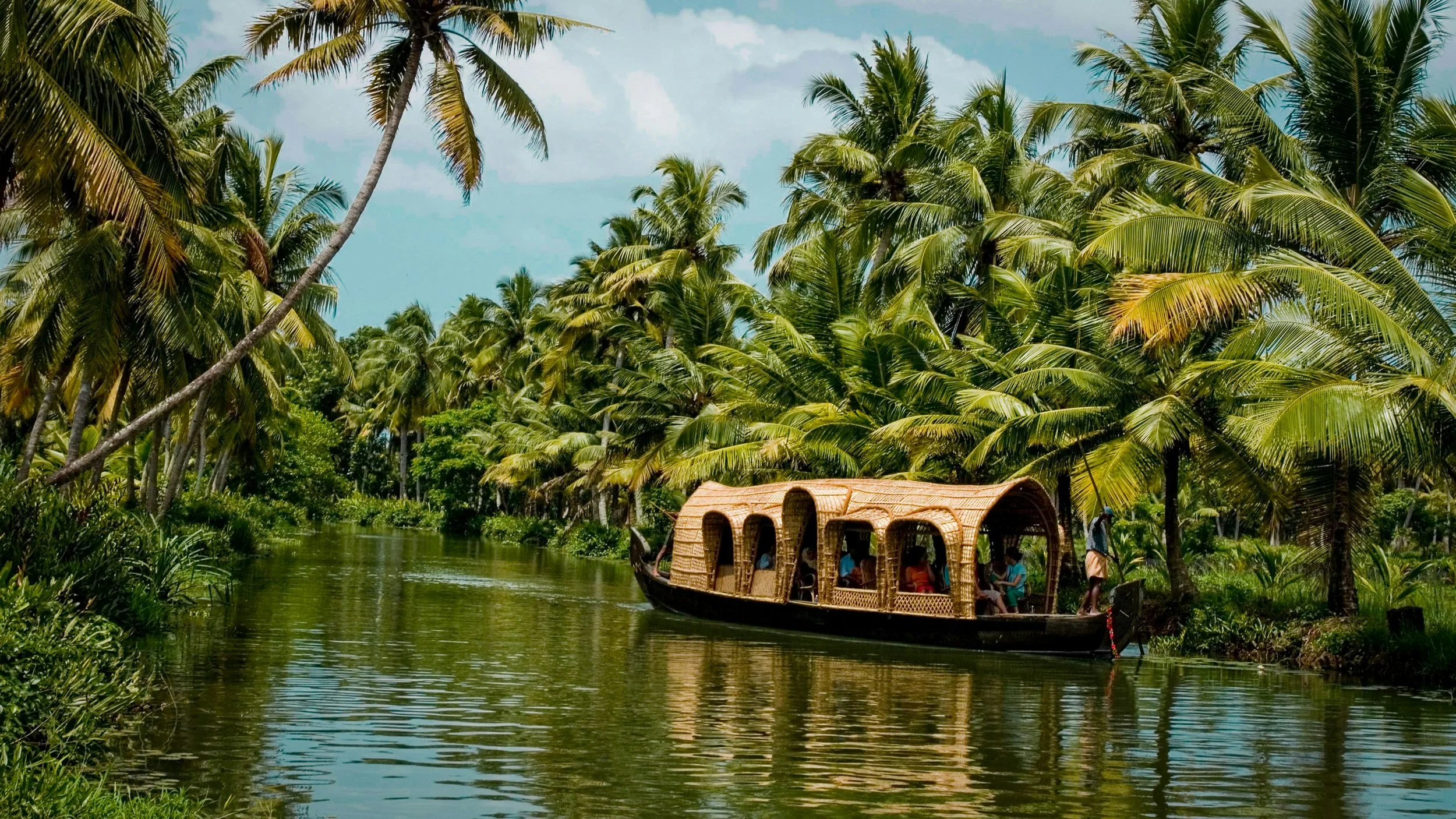
To energise the soul, the Hindu community spend their time in prayers; particularly they read the Ramayana epic in the Malayalam month of Karkadakkam which is mid-July to mid-August. The needs of the body are taken care of through an Ayurvedic treatment known as Panchakarma. Malayalis also eat a rice porridge prepared with medicinal herbs known as karkadakka kanji. Monsoon is also the period of boat races known as Vallam kali in Keralam. Fed by edavappathy, the rivers flow with full might, making them an ideal site for boat races. Some of the famous boat races are the Chambakkulam boat race, the Nehru Trophy boat race, the Thazhathangadi boat race, the Aranmula boat race, the Uthradam Thirunal Pampa boat race, and the Payippad boat race among others. Then there are various minor boat races. People enthusiastically come to watch these races, making it a prominent cultural event of monsoon. In the last phase of edavappathy, Keralam celebrates its national festival Onam. The traditional belief is that the virtuous King Mahabali, who once ruled Keralam, returns from netherworld to visit his dear subjects every year on the Onam days. It is also a celebration of agricultural prosperity as there is a good harvest all over Keralam at this time.
Monsoon reaches Karnataka and Goa by the end of the first week of June. Rains are intertwined with the life of Kannadigas. In north Karnataka, the monsoon season is the time for worship of the folk deity Jokumara. Jokumara is the god of rain, fertility, and agricultural prosperity. The festival of deity Jokumara is known as JokumaraHunnime and is held in Bhadrapada, the sixth month of the Hindu lunar calendar, which corresponds with September. A prayer to god Jokumara is expected to bring copious rains. Kannadigas welcome rain with a sense of responsibility exemplified by the habit of rain harvesting. In Udupi and Dakshina Kannada districts, people harvest rainwater through Madakas. In the rugged topography of these areas, people would wall off large uneven surfaces. Such walled off surface would collect water during rains. These structures are called Madakas. But this culture of rain harvesting is slowly dying off, with many Madakas in a state of disrepair. Human sluggishness may be undermining water harvesting, but nature’s miracle is steadier.
On the Mattu and Padukere beaches of Udupi, the waves are luminescent during monsoon time. This is the phenomenon of marine luminescence; light generated by marine organisms. The Kudle Beach, Belekan Beach, and Nirvana Beach in Gokarna also exhibit this phenomenon. At night, the luminescent seawater is a beautiful sight to behold. The heavy rainy period is also a time of disease. In Tulunadu region, people usually consume a bitter-tasting herbal drink called Kashaya to boost immunity. This health culture is similar to the consuming of Karkadakka kanji by Malayalis.
By the time monsoon reaches Goa, Goans are in a festive mood. Rainy season is festival season in Goa. São João is a festival celebrated by Goan Catholics on 24th of June of every year. It is a celebration of the birth anniversary of Saint John the Baptist. The celebrations are vibrant. People sing traditional songs and wear crowns handcrafted with flowers and creepers. As part of the festival, the youths leap and swim in wells, ponds, and streams. Five days after São João, Catholics celebrate the feast of St Peters and Paul. The local fishing community celebrates it with full pomp. The centrepiece of the celebration is Sangodd; a floating stage made by tying three or four boats together. A cross is placed on the stage and fishermen after prayer engage in merriment and musical performance. The onlookers enjoy the performance from the river bank.
Goa’s own mud festival, Chikhal Kalo, is celebrated in the rainy season. The festival is held near the Shree Devki Krishna Temple in Marcel. The mud plays celebrates the playfulness of child Krishna. Adults and children from all communities participate in these games. Then there is the Bonderam festival. The festival is celebrated on Divar Island, in the second half of August, when the paddy fields are ready for harvest. The custom which began in Portuguese days to demarcate the fields using flags of different colours later transformed into a festival. The main items of the celebration are the flag parade and float parade. Goan food and music performances are also an attraction. The festive mood of the monsoon finds its most elegant expression in the majestic Dudhsagar waterfalls.
The journey of monsoon from Keralam to Goa is the story of how the rain sets the rhythm of human activities. Monsoon is the time of harvest for farmers and fishing folk in these western coastal states. People across these states celebrate rain through festivals; in Keralam it is Onam, in Karnataka it is prayers to God Jokumara, and in Goa it is São João. Rain replenishes nature with bountiful waters in rivers and lush green growth of trees. In India, rain is everywhere, in the mythology, nature, cultural and economic life of people. It is always Rim jhim Gire Sawan.
S. M. Visakh has been published in the Frontier Weekly, The New Indian Express and The Free Press Journal. His interests include politics and modern Indian history. He has a M.A in Political Science.
Photograph by Nature Photographer, downloaded from Unsplash.com