By Fátima da Silva Gracias
Weather
I love the rains in Goa, my home state in the West Coast of India. They are beautiful — for me, the best season of the year, even though sometimes the heavy downpours and flooding interrupt daily routines and create chaos all around. It is a time for reflection — a season to pause and complete the things left pending during the rest of the rushed year. While some people remain indoors, for many, it is a time to reconnect with the earth itself, to witness growth, quite literally sprouting from the soil. It is a time to see paddy fields sown and ghanvti vegetables like tambdi bhaji, ridge gourd, cucumber, bottle gourd, okra, bamboo shoots, taiquilo and mushrooms (anti hill variety) flourishing in abundance.
During my childhood, the monsoon typically lasted roughly from June to September. It would officially begin with Mrig/ Mriga (the appearance of a group of stars in the form of a deer’s head), which, according to the Hindu calendar, appears on 5th or 7th June — the traditional marker of the onset of rains, about fifteen days after the monsoon first reached Kerala in the south of India. This day was considered the herald of the monsoon and signalled the beginning of agricultural activities for farmers. For children, it also marked the beginning of the new academic year, which started the following day after Mrig, depending on the day of the week. It was never on a Sunday.
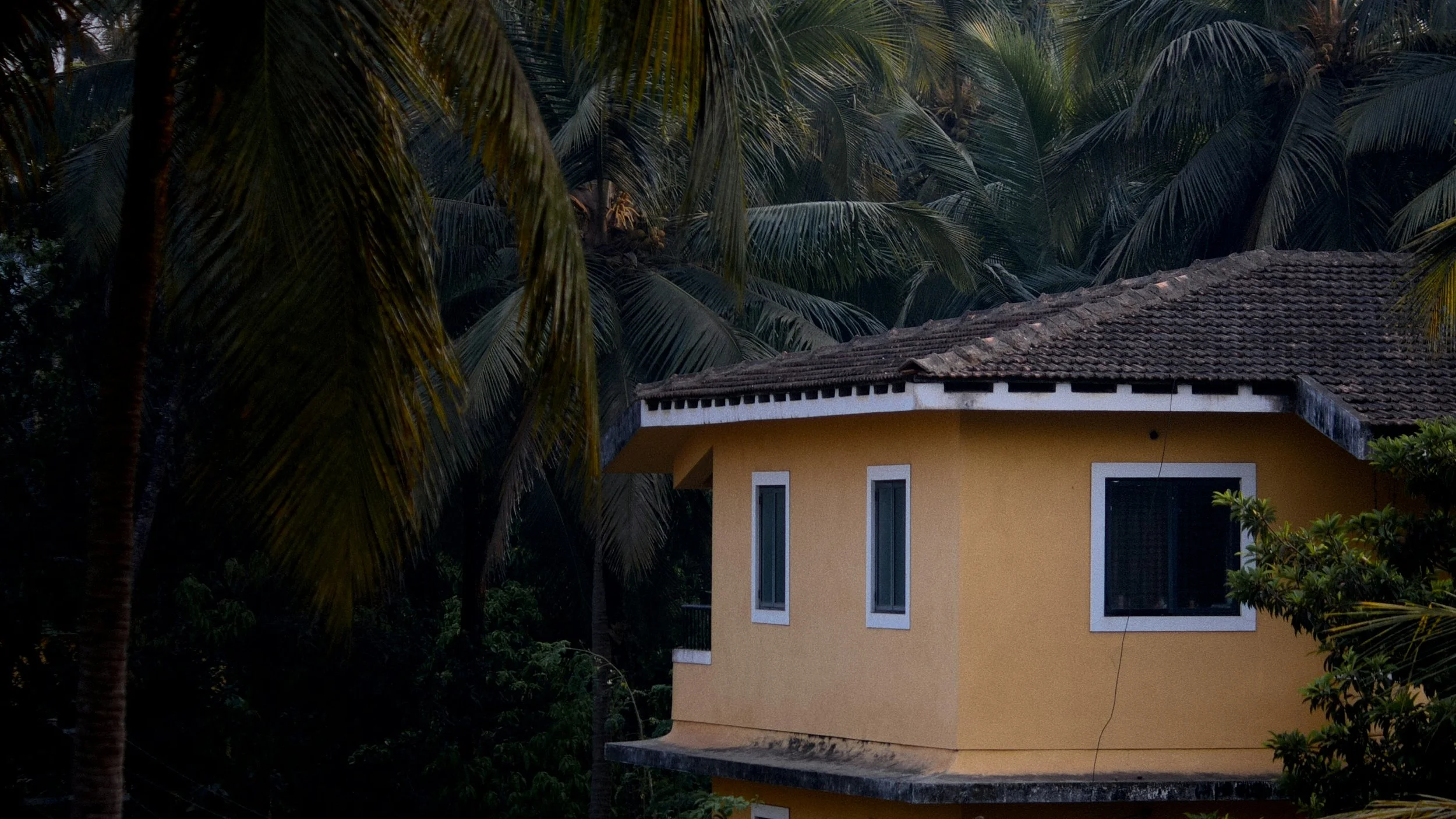
People predicted the weather by looking at the sky, based on the heat, wind and cloud formation. Today, however, with global climate change, everything about the monsoon seems to have changed. In June, when it began to pour on a regular basis, Goans would gear up for it — having the roofs of their houses repaired to prevent leaks, the outer walls of some houses covered with mol’l made of fronds of palm leaf, firewood for cooking stocked while still dry, coconut oil stored, and onions tied into neat clusters with hay and hung in the kitchen from horizontal bamboo poles. Paddy was par-boiled by some, dried outside the house, and then taken to the mill for de-husking.
If there were no rains within a week of the mrig, it was customary among Christians to seek the divine intervention of Santo António (the saint of lost things and rain). I remember villagers coming to our ancestral house to take the large statue of the saint from our oratorio (house altar). They would undertake a solemn procession with the saint around the village, praying fervently for rain. A few weeks later, the heavens would open up.
Traditions
The monsoons of the past, bring back a flood of vivid memories — lightning and thunder, the fresh earthy smell after the first rain, the sound of raindrops on tiled rooftops, days of heavy rains, dampness and leaking roofs. I remember the fallen dry leaves from mango and tamarind trees around our home, soaked and scattered, gently carried along by tiny streams of rainwater. The lush green grass and trees all around. The monsoons also remind me of the rough seas along coastal Goa, when fishing boats rested with their nets on the shore, waiting for the rains to subside before fishing could begin again.
And then there were the unforgettable paper boats, made from the pages of exercise books and old newspapers, released into the gutters by us children in front of our house and school. I remember splashing in puddles on the roads on our way back from our nearby school, wearing raincoat, plastic sandals or gumboots—a footwear our mother was not keen on, as they did not dry easily and remained damp. I also recollect occasionally picking up, on the way from school, a few godavlim ( seeds of cashew apple that germinate with the first rain) from around the cashew tree.
It was that time of the year when one would see lush green paddy fields stretching far and wide, with farmers, both men and women, busy performing multiple tasks of sowing, weeding and so on. The men wore kambols (blankets made of coarse goat/sheep hair to shield themselves from the rain and keep them warm), while the women carried kondo or ghumro—bamboo frame covered with seasoned palm fronds or other leaves available in the forest. They worked barefoot, tirelessly from early morning. They took two breaks -- mid-morning for a bowl of canjee (rice gruel) and to smoke a beedi (cigarette) and another for lunch. They resumed work post lunch until early evening. Before going home, men often stopped at one of the villages tavernas for a copito or two of feni and to chat with fellow labourers. Sometimes, around these places, the air carried the rich, comforting aroma of freshly deep-fried snacks—bhajins, kapam, spicy mirchi, and roasted cashew nuts—making the monsoon even more memorable.
The monsoon was the season when some people, mainly men, were seen outdoors wearing hadayo of wood with leather strap in front, along with large umbrellas. Although it was the darkest and gloomiest time of the year, the monsoon also brought joy through its many important and unique Christian and Hindu religious festivals--- São João ( celebrated in late June in Goa, Portugal, and throughout the Catholic world), Nag Panchmi, Nariyal Purnima,Tavshachem Fest (when childless married women offered cucumbers to St. Anne at Talaulim Church, Tiswadi, praying for children), the Feast of Our Lady of the Assumption (15th August), Festa de Novidade and the most popular Chavoth in honour of Ganesha, the son of Parvati and Lord Shiva. During the early centuries of Portuguese rule, when idol worship was banned, Hindus would draw images of Ganesha on paper, worship them behind closed doors, and later immerse them in the house well.
I can never forget the feast held in honour of Saint Anne, the mother of the Virgin Mary, celebrated towards the end of July in my father’s ancestral village. For eight to ten days after the feast, litanies were held in various homes in our bairro/vaddo, with our home marked for the oitava — the eighth day after the main feast. Unlike today, these litanies were attended mainly by the menfolk, though the women of the host family also took part. The ladainhas were held in the evening and included prayers, the recitation of the litany, and hymns sung in three languages —Konkani, Portuguese, and Latin. A violin accompanied the hymns, lending a quiet, solemn beauty to the devotion. Though I have forgotten most of the words, I still remember a stanza of the hymn sung at the end, which began: Santa Ana, socorrei miseri. Feasts also bring to mind firecrackers, fireworks, early morning gunpowder bombs (fozenes), and the alvorada at dawn.
Food
I have many memories associated with monsoon food. The season brings to mind simple yet special tea time snacks, known as jagradas, made of rice, jaggery, lentils and coconut. In Goa, a variety of traditional foods were prepared for different feasts and special ones on some occasions. For the feast of São João, steamed cone-shaped folle were made from rice paste, desiccated coconut, and jaggery. For the feasts of Novidade (Goa harvest festival), Ganesh Chaturthi, and Feast of Our Lady of the Assumption, sweets such as patolleo were prepared.
Patolleo were made from pre-soaked rice (ukade tandul), ground into a smooth paste and spread over freshly grown turmeric leaves. These leaves were usually grown in house compounds or bought from markets during the early rainy season. A mixture of grated coconut and jaggery was placed over the rice paste. Hindus traditionally used sugarcane jaggery, while Christians used palm jaggery. The leaves were then folded, sealed, and steamed in a cooker called a konfro. This was the time of year, when turmeric leaves were readily available for wrapping the batter.
Toward the end of the rainy season, we would visit the homes of our friends to pay our respects to Lord Ganesha. During these visits, we were served a variety of sweets, including modaks, shankarpali, different types of ladoos, and the popular nevreo. Memories of monsoon season associated with purmenth from the time of our parents and grandparents are unforgettable. Stocking up food for the monsoon was called purmenth in our Konkani language, a term derived from the Portuguese word provimento, meaning provisioning or stocking up.
Until a few decades ago in Goa, this practice was important for several reasons. Food had to be procured in advance due to limited mobility caused by heavy rains, flooding of low-lying areas, lack of transport and ill health. Sometimes spices like chillies and others would get mildewed when exposed to the damp monsoon air. Farmers would be busy working in their fields, and people living in the interior could not easily travel to towns to buy provisions. Heavy rains also prevented traders from bringing goods across the borders of Goa—from
Malabar in the south, Surat in Gujarat, Bengal and even from overseas. Economics, caste, and religion often determined the type of provisions made within different communities. Some items were common to all, while others were specific to certain groups. There were foods not consumed by Hindus and Muslims, and others that were not preferred by Christians.
In fact, purmenth preparations began well before the rains—often at the beginning of the new calendar year—when new fruits and vegetables would appear in abundance and were easily available at low cost. The preparations would continue until mid-May. Provisioning was sourced locally from village and town vendors, merchants, and provision fairs held in weekly markets in places such as Mapuça (Fridays), Calangute (Saturdays), Quepem (Sundays), Borim, and other locations.
Provisions were also collected from fairs held during important church feasts in Mapuça, Margão, Sanguem, and Panjim during the months of April and May. These feasts were known as Purmentache Festam, which marked the beginning of provisioning before the monsoon season. The fairs usually lasted from three days to a week or even longer. Certain provisions were purchased months in advance of the monsoon, such as dried chillies, spices, pulses, onions, salt and salted dry fish. Chillies were required in large quantities for the preparation of daily curry and other gravies. Some of these were grown locally in Goa, while others were brought from across the borders.
During the monsoon, fishermen did not venture out into the rough sea. As a result, fresh fish became scarce, and people depended on salted dry fish such as mackerel, shark, catfish, kingfish, and velli to accompany rice and curry, which formed the daily diet. Salted fish was usually roasted or fried in a small amount of oil.
Salted dry fish such as mackerel was often mixed with sliced onions, green chillies, fresh green coriander and vinegar. This simple yet flavourful salad was a popular appetizer among Christians typically eaten with rice and curry when fresh fish was scarce. Sometimes, mackerel was substituted with dried prawns/shrimps. Dry prawns and galmo were popular among Hindus for preparing the delicious kismoor, which was made with onions, coconut, and other ingredients.
I recollect my paternal grandmother preparing a special preserve of salted dry fish known as Peixe Tamarindo or “Para” in Konkani. The best pieces of salted dried fish—usually mackerel, catfish, or ray—were carefully selected and prepared using homemade toddy vinegar and a paste made from dried red chillies and other condiments. When required, pieces were shallow-fried and served as a flavourful accompaniment to rice and curry. This preserve was popular among the Christian community in Goa.
During the colonial period, such preserved foods were often carried by Goans travelling to other parts of British India, especially Bombay, and even as far as Mozambique, where sizeable Goan communities had settled. These preserves allowed migrants to carry a taste of home with them.
An important ingredient in many Goan dishes was vinegar made from palm toddy. Christian households traditionally prepared this vinegar before the onset of the monsoon, when good-quality toddy (locally called sur) was available. The toddy was fermented and matured for over a month until it turned into vinegar. This vinegar was essential for flavouring meat and fish dishes and was also used in pickles and in preparing the famous recheio masala.
Before the monsoon arrived, households also gathered and stored various souring agents used in Goan cooking. This included tamarind, kokum (locally called bhindda chim solan), and ambheem solam. These ingredients gave Goan curries and gravies their distinctive tangy flavour. In Hindu homes, papad making was a major activity for women before the rains. Papads were prepared in large batches sun dried and later fried to accompany rice and curry throughout the monsoon months. Similarly, pulses were purchased in advance, washed, thoroughly sun-dried, and carefully stored for use during the rainy season, when supplies were not easily available.
Preserves, pickles, and jellies were traditionally made by women of all communities in Goa during the fruit and vegetable season from February to June, before the monsoon rains arrived. This was a busy period for the women of the household, who sometimes sought help from neighbours to carry out the many tasks involved. These preserves were generally prepared for the monsoon season.
A variety of pickles were made from fruits and vegetables such as mango, tendlim (gherkin), brinjal, lime, bitter gourd, carambolam and prawns. The most popular was mango pickle made from tender mangoes. Tender mangoes were also often preserved in brine and served with canjee or the daily meal of rice and curry.
My mother made delicious tendlim, mango, lime, and occasionally carrot pickles. Care was taken to select good-quality tender gherkins that were neither ripe nor mature and they had to be locally grown in fields or kitchen gardens. In the past, carrots were not easily available in Goa and usually came from across the border.
Some families also made mangada (mango cheese and jam) from mango pulp using varieties like Monsorate, Malcurada and Hilario (Mangilal) mangoes. It was eaten with Goan pão (bread) and chapatis for breakfast and at tea time in the afternoon.
Among Christian families, pork chouriços were also made at home. They were either sun-dried or dried over the smoke of the kitchen fire and then stored in jars, sometimes covered with pork fat, or hung on a horizontal bar in the kitchen.
These preparations reflected not only culinary traditions but also a rhythm of life shaped by the seasons, the monsoon, and the resourcefulness of Goan households. The monsoon is not just a season of rain; it is a season of hope—a time that brings the much-needed rains for our lives and for the growth of our food. It is a period of renewal that revives many cultural traditions. It is important to us because of their impact on our livelihood, environment and cultural practices. The monsoon is a season of countless memories that have stayed with me for a lifetime.
Fátima da Silva Gracias is a Goa-based historian with a doctorate in the area of Indo-Portuguese History. She is the author of several books and publications, among them Cozinha de Goa: A History and Tradition of Goan Food and Antonio Xavier Trindade--An Artist from Goa , 1870-1935.
Banner image by Slava Taukachou downloaded from Unsplash.com