By Sheela Jaywant
With the first rains, we tie nylon ropes to the fixed hooks in the small passage in my flat which leads from the kitchen to the toilet. Up near the ceiling, lengthwise, so that we can hang clothes above the sink and washing machine, outside the bathroom door. We have separate toilet and bathroom; that way, family members can simultaneously hurry with different personal chores while hastening to work in the morning. Every year, by this time, the previous year’s ropes have stretched and hang so that the clothes we spread on them slowly, inevitably, get bunched up in the centre. If they—the ropes, not the clothes—don’t look frayed, we reuse them, just tighten the knots at the ends to straighten them out.
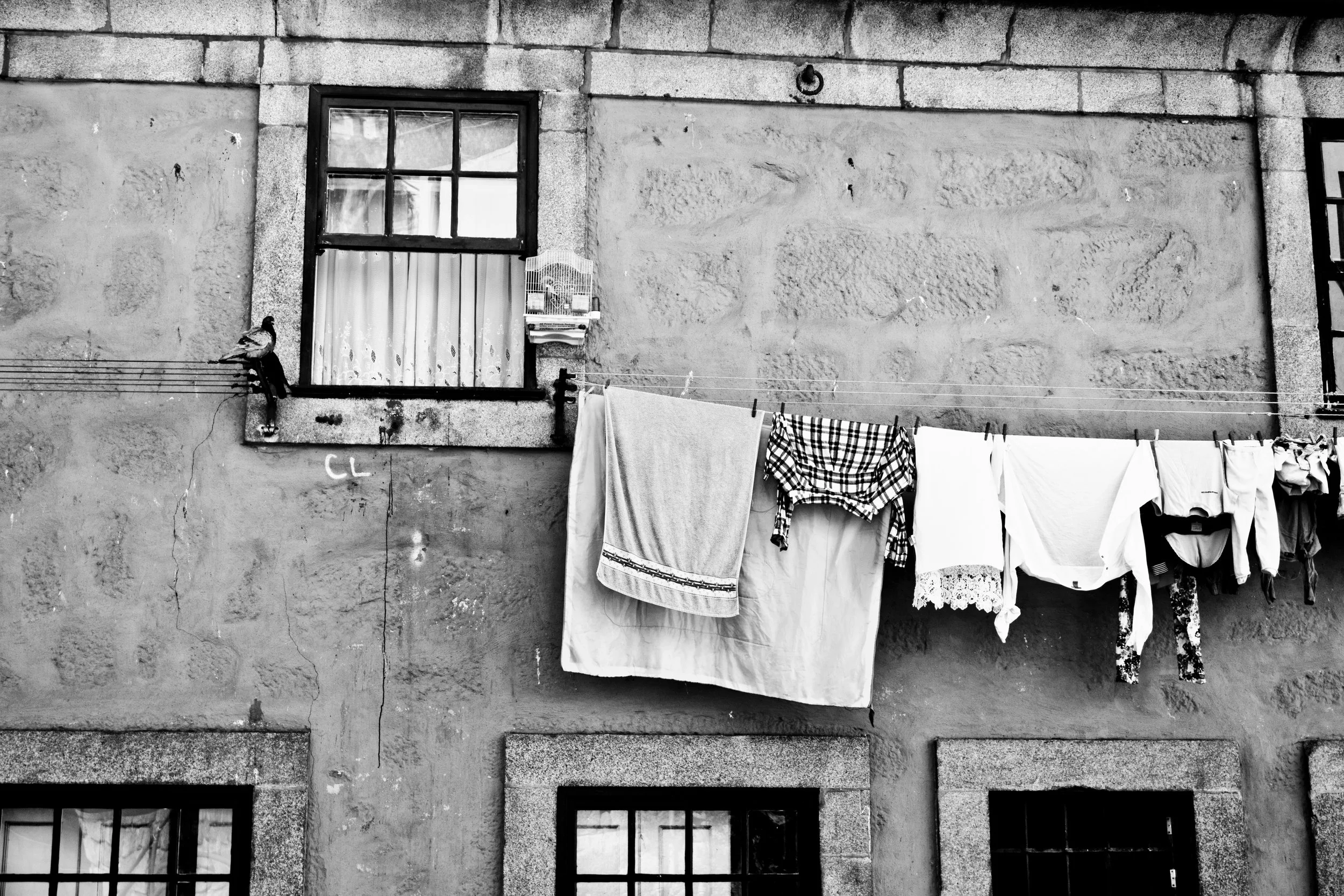
With our warm breaths rising, the heat from the kitchen and the cross breeze from the bedroom and hall windows, our sheets, petticoats, towels, uniforms, underwear, kitchen rags, saris, trousers, shirts, dry in a day. Not crisp like when they flutter in the sun outside our balcony for the rest of the year, but damp will-do dehydrated so we can iron them steamily. Sometimes, we put them on hangers and dangle them on the same ropes, but we don’t have many hangers and they come irritatingly close to the head.
Once upon a time, the odd rupee that was left in a pocket whilst washing became soggy and near useless if it didn’t have hot sun to crisp it afterwards. Now, with the UPI digital payments, tissues and notes written on paper still get mushy, upsetting everyone except the owner of the garment, because of the white spots on all clothes washed in that cycle, which are near-impossible to get completely rid of; we have special hard-bristle brushes kept for the purpose; they don’t work that well; we don’t know what does.
My building has twenty-three floors each with five flats. In every flat there are minimum four humans staying. Some have babies or old relatives. Do the arithmetic, how many clothes dry in this building each day, through the season? Moreover, our colony has four such buildings and in our lane there are nine colonies like ours. There are several such clusters in our locality. I could be describing any postal pin code in Mumbai. These are the problems middle-school students should be solving. Since none will tell Delhi’s education experts this, forget it.
In the thin, narrow corridor with a single max-four-passenger lift are kept buckets outside the doors to dunk in crumpled raincoats or folding, Chinese made umbrellas. The chappals, sandals and slippers are usually kept in orderly rows, though sometimes they lie at foolish angles or haphazardly on top of each other, if the wearer-remover is in a hurry to get to the toilet on arrival. Happens, when the weather is so wet and public amenities so few and dirty.
I learnt in standard III, that mould and fungus grow in the monsoon on moist surfaces that give them nourishment. The example our textbooks gave were bread slices and leather shoes. I have no idea why the authors didn’t think of papads or anything fried or dried (think shrivelled and shrunken bombil) that are kept in supposedly sealed dabbas. We keep them triple-wrapped in polythene bags before lidding them in tested steel containers. For additional security from airborne H2O molecules, we place a cut plastic square and place in on the mouth of the dabba before putting the lid on. Opening these is cause for nail-breaking, FYI. As for the mould on leather shoes, what are those? I buy rexine, plastic, canvas all-weather footwear. The wallet I bought as leather, was faux, hardier and lighter than the real stuff, with no mildew shadow. Besides, what if the leather is of Mother Cow? Would it affect my karmic brownie points? I hope the leather shoe has been removed from primary school science textbooks. Flours, dals, poha, rawa and other grocery cousins share the fridge for that financial quarter.
Let’s not talk about sugar and salt, their lumpiness is impossible to tackle. There’s a reason why they are measured with fingers and not spoons. Instant coffee stays well in the freezer, but tea, that beverage of cheer and wake-up, doesn’t go clingy and clumpy if you buy small, foil-sealed packages.
Commuting, impromptu swimming lessons and leptospirosis, are related. Unadulterated water dripping from grey clouds picks up sulp-, phosp- and other -hate molecules before causing mayhem on the city. The roads are converted into streams because the gutters don’t do their job. They’re choked with plastic which the government encourages manufacture and use of. There are civic-sense advertisements and teachers in school that encourage people to use cloth bags. But no one knows why polythene bags, like cigarettes which are injurious to health, as every cigarette packet informs us, are still made in licenced factories. Bacteria, viruses, mosquito larvae, and some other nil legged creatures are happy because they can do their jobs of make ill and kill to balance Nature’s proportion of two, four, six and eight legged creatures.
Some people, like those who live in Goa, talk about pure air, greenery and creepers and petrichor. People from inland areas, North India in particular, buy villas to spend their empty hours in, learning mahjong, connecting with others of their ilk over lunches at local eateries, enjoying the drama of the skies, the lightening, the thunder (‘oh my gaawwd, it’s so-o scary, just amazing’), dunking in private pools since the sea is out of bounds for responsible, lifeguard-obeying citizens.
The farmers and fisherfolk have similar annual, seasonal rhythms. Both have brief periods of respite when the sky is dark and the sea rough. Sowing, harvesting, fishing, netting, waiting, waiting, waiting, marketing, repeat. Some lives have not changed for centuries, though casinos come and governments go.
The rest of us do what we do all year long, get up with the sound of the rationed water supply gurgling in the tap or the set alarm, fill up buckets and bottles sometimes. Rush to loo, do chores, gulp breakfast if we can, pack lunch, pick up laptop, phone, keys, charger, hope to catch the bus or train on time, and reach the office which is more comfortable, ac and all, than our house. Visibility be damned, traffic is traffic, even in Porvorim, the soon to become capital of Goa. Cars play hopscotch over pots and ditches, the newest office to shift from Panjim to here, the Directorate of Transport, has joined Department of Aviation, the High Court, the Board of Education, the Public Works Department, the Statistics and Registration office, yada, yada, yada.
Sitting by myself, in the middle of the day, I read an email asking for an article on Monsoon Romance. I open my purse to take out a pen to jot down ideas. Still old-fashioned, you think? No, it helps to give the impression of being busy, the Systems people cannot track this on their server what I’m doing, and my computer and phone aren’t charged because there’s no electricity. The paper pad is moist, humidity being high, and my sweaty palm picks up a white powdery substance. Fungus. Forget romance, forget writing. I go to wash and wipe my hands. Enroute, out the window I see water pouring in torrents and remember other monsoons in other places. Jodhpur, the desert where we had floods because of the clayey soil and little prawns began to jump out of the ground. Ghaziabad, where the mango crop perished one year when the Yamuna and Hindon rivers caused unseasonal floods. Tambaram and Secunderabad, where we gratefully rejoiced at the drop in temperature. Way below me, I see the traffic, not moving at all, red lights in one line, yellow in the other. We don’t believe in improving public transportation, we build bridges so we can sit one human in one car. And then, hot or wet, we curse the weather.
Come the monsoons, basics change, we adjust. Whether it’s drying clothes or getting to work, there’s inconvenience. Yet, somehow, the magnificence, the overwhelming beauty of Nature’s theatrics on a scale that challenges imagination, the music, the aesthetics, the perfume, they overshadow seasonal illnesses, the dampness of the clothes, the minor irritants. Through the narrow windows and the slivers between skyscrapers, through the news of drownings and other deaths, one sees only the loveliness. As always, Nature wins.
Sheela Jaywant is a humour columnist, travel-writer and some of her stories have won international prizes. Widely anthologised, her single-author anthologies include, Quilted: Stories of Middleclass India (2003) and The Liftman and Other Stories (2009).
Banner image by Jens Herrndorff downloaded from Unsplash.com