Interpreting Sudhirsukta: Waghacho Rag

Interpreting Sudhirsukta: Waghacho Rag

By Augusto Pinto

Issue no 18

In 2013 a poetry collection came out which in my opinion is a jewel of Konkani literature. There are those who might dispute this view and indeed regard this collection as not merely valueless but even pornographic. Be that as it may, one thing is true: anyone who has read this particular poetry collection will agree that it is the most controversial work of literature ever produced in Konkani.

Gavin Barrett: I am a Pocomomo - a postcolonial modern mongrel

Gavin Barrett: I am a Pocomomo - a postcolonial modern mongrel

By Selma Carvalho

Issue no. 18

I am what I call a pocomomo—a postcolonial modern mongrel. I am Goan thanks to my mother and Anglo-Indian thanks to my dad and am fortunate to be claimed by both communities. Without meaning to sound precious, my lived experience contains many exiles. So there is always the yearning for Goa that many in the Goan diaspora feel.

The Suppression of Romi Konkani and the shaming of a people

The Suppression of Romi Konkani and the shaming of a people

By Malavika Neurekar

Issue no 18

The book is about people who want to belong and yet can't; that is to say the liminal subject. Now I know all about being the liminal subject. My mother is Mangalorean and my father was Goan, and so when I grew up in Goa, this liminality, of being not quite Goan, was an important part of my life.

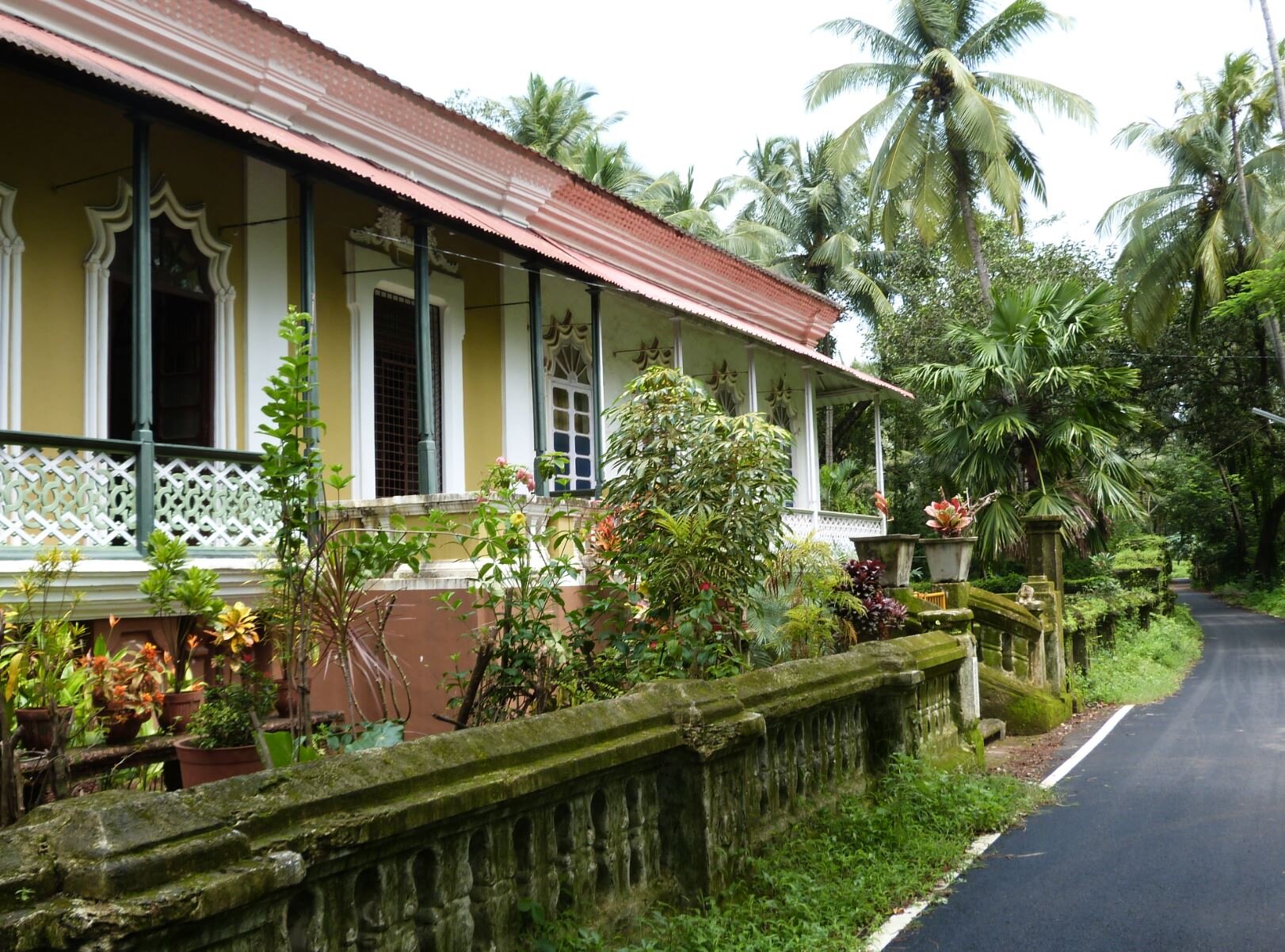
Goan Homes: A Lamentation

Goan Homes: A Lamentation

By Yvonne Vaz Ezdani

Issue no 17

The sun has just waved a glorious goodbye, leaving lingering light for my path. I latch the gate behind me as I step out on my evening walk. Clusters of crimson bougainvillea slipping over our white-washed garden wall make me stop to let the beauty soak in. More warmth, as passersby smile and friendly neighbours wave from balcãoes as I walk on.

Lives in Childhood: Goan Writers & Artists

Lives in Childhood: Goan Writers & Artists

By Selma Carvalho

Issue no 16

the home has always been a special place, one we take for granted perhaps, but which dwells in our imagination—the geographic specificity of it, the relationships which unfold within it, the momentous events we share and celebrate—and particularly the homes of our childhood remain with us, becoming an indelible part of our consciousness.

Bombay Balchão: Inspired by Family Histories

Bombay Balchão:  Inspired by Family Histories

By Selma Carvalho

Issue no 16

My great-grandfather Ignatius Borges was from Sadashivgad in Karwar; he worked as a motorman for the railways and travelled often. His younger son, Stephen, my grandfather, served briefly in the army, before moving to Bombay in the 1940s, where he lived in a kudd, a short distance from Cavel. He got married to a Goan bride, my grandmother, Anna Vaz, and got himself a job as a tailor, and settled on Grant Road.

Peter Nazareth: I am a 'Pure Goan' but there is no such thing

Peter Nazareth: I am a 'Pure Goan' but there is no such thing

By R. Benedito Ferrao

Issue no 16

I was the first-born son in the family. My sister Ruth was born when I was over four years old, and so I was in effect a lone person. My father had a lot of books in our house, including joke books. He was well known by Goans for giving fine speeches and always including a joke in the speeches.

Goan Literature: Then and Now

Goan Literature: Then and Now

By Victor Rangel-Ribeiro (preview only)

Issue no 16

What was the state of literature in Goa, a hundred years ago? With no radio or TV, and only one movie theatre in distant Panjim, surely people spent a lot of time reading? Yes, they read a lot of newspapers, that sprouted like mushrooms, and died almost as quickly. And what about books? Seventy-three long years had passed between the publication of Os Brahmanes and Chord and Discords. What were people reading in the intervening years?

Poets and Uncles

Poets and Uncles

By Selma Carvalho

Issue no 15

Film-maker and poet Jonas Mekas has presciently noted, ‘In the very end, civilisations perish because they listen to their politicians and not to their poets.’ So come, let us listen to our poets. Poets are the quivering heart of a nation, its pulse, its very essence. Let us listen to the words of our very own major Goan poet, Armando Menezes.

Short Memoir: My Son's Goa

Short Memoir: My Son's Goa

By Rachana Patni

Issue no 15

Joshua and his father sat with a book on dinosaurs. On the first page there was a timeline which indicated that first there were water-creatures, then came dinosaurs, and then finally, came human beings. Joshua looked at this timeline, heard the description of it, and immediately asked his father, ‘Papa, what will come after human beings?’

Short Memoir: Growing up in Palolem, 1963

Short Memoir: Growing up in Palolem, 1963

By Sheela Jaywant

Issue no. 15

The men of the Gaitonde family were rarely seen in the ancestral house. The Portuguese had left; the cry aamchey Goyen aamkaa jaay (our Goa must be ours) still echoed around; it wasn’t yet certain whether the Union Territory would be merged with Maharashtra. The villagers kept their distance from my politically active family; my eldest uncle, Dr. Pundalik, had, in the 1940s, done an unthinkable thing. He married a Portuguese girl, Edila, who lived with the family for some years.

The Goan Festive Season Through History

The Goan Festive Season Through History

By Selma Carvalho

Issue no. 14

a 1930s ‘Christmas in Goa’: “Our host and hostess were a charming couple who lived on the revenue of their property and had a large house with many rooms to spare… Christmas dinner proved to be something like a private cabaret, the entertainers being the younger members of the family of our hosts. We sat around a long room and a bottle of vintage wine was opened. A young man gave us a tune on the fiddle and was loudly applauded. Then some of the boys and girls danced to the music of the gramophone. The proceedings followed the same sequence all over again – wine and further toasting, music and dancing and food.

Souza’s Art Lineage: From Attic to Public Art 

Souza’s Art Lineage: From Attic to Public Art 

Bu Jugneeta Sudan

Issue no. 14

Understandably, Solomon’s priority then was to set out on a project of celebrating his grandfather’s village first, by painting murals of its iconic men and women, on public walls. It takes a village to raise a palpable cultural environment, and Saligao ranks high on this account. The village welcomed Solomon with open arms and he was sighted perched on his ladder…