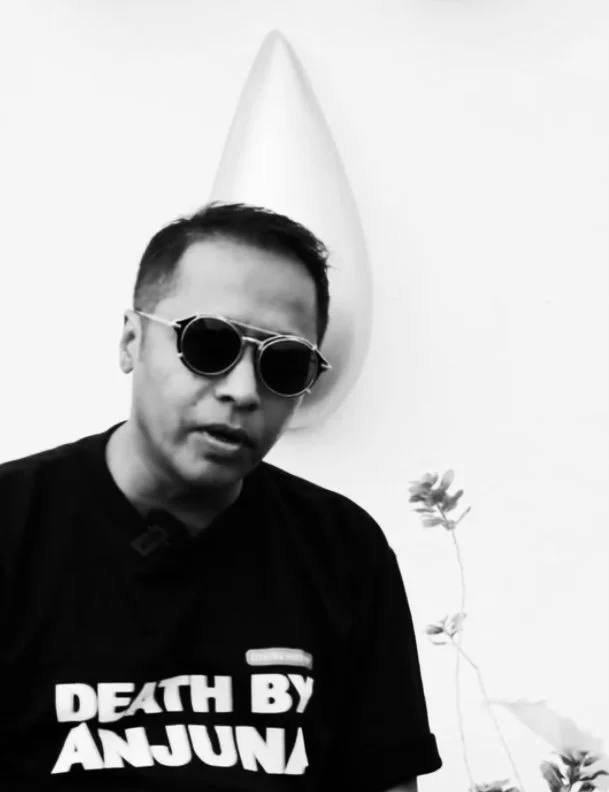
Interview by Selma Carvalho
Nilankur Das was born in Tezpur, Assam. He works at the Museum of Goa, across partnerships, networks and public engagement. Beside writing, photography remains a personal practice, a way of seeing for him. He writes a column for oHeraldo, and has been frequently published in the JRLJ. Here in conversation with Nilankur, we discover his thoughts on the short story form.
What were your immediate thoughts on winning the JRLJ Writing Competition 2026?
A sense of arrival. Being read closely and then affirmed by expert eyes felt like both an embrace and a summons. It sharpened my edge of responsibility. Now the work is to keep honing, to keep the blade honest, and to never grow comfortable with yesterday’s clarity.
Your writing tends to be fast-paced. Paul Melo e Castro who judged the competition describes your story as having a “Denis Johnson in Goa,” vibe. Which authors do you draw inspiration from for your stories?
I find myself returning to José Saramago’s long-breath sentences, Raymond Carver’s restraint, Han Kang’s ruptures, Dostoevsky’s moral tempests, Arundhati Roy’s political lyricism. They sit with me in different ways, sometimes as rhythm, sometimes as a questions.
Your writing is effortless. How do you form the plot, devise the action, and bring it to a conclusion.
I begin with a loose cartography, characters, tensions, possible fractures, and map them in the mind. From there onwards, it is an act of negotiation. I return to the work often, revisiting it until there is some equilibrium between what I intended and the becoming.
Describe some elements of the short story form you think are crucial and what tips would you share with fellow short-story writers?
I’m increasingly drawn to the idea of entering a story mid-breath, abandoning clear beginnings and neat endings. I do let the narrative oscillate. As for advice, please practice until a style is uncovered and then keep on sharpening that edge.
What are you thoughts on the spaces available within Goa to platform the short-story form and how can they be improved upon.
There are meaningful pockets, this literary journal, the annual Goa Art and Literature Festival that keep the form alive and visible. But ecosystems thrive on multiplicity. More competitions, more festivals, more reading circles, more friction between readers and writers. It’s a layered ecology that must be nurtured by both institutions and the public imagination.
Tell us about the sort of writing that inspires you in general, who sort of books you wish publishers in India published.
I’m drawn to magic realism, that sits just beneath the ordinary, stories that tilt the axis slightly. I believe in the generosity of literature, but I’m wary of writing that narrows thought, that hardens into propaganda or regression. Publishing, at its best, should expand the field of possibility, not shrink it.
Tell us about current or future writing projects you are working on.
There’s a longer work taking shape, rooted in Goan mythology, but unfolding in a contemporary landscape. It sits at the intersection of extraction and excess of human appetite and a kind of universal justice that refuses to be ignored.