By Selma Carvalho
The tragedy of human societies is that we are only capable of accessing recent memory to form opinion. This tragedy is further compounded in an era when just about anybody can spread lies and videotape. Anyone with basic knowledge of software or AI can make reels on history they’ve discovered through memes, and then spread the virus of untruths, imagined oppressions and constant majoritarian victimhood to thousands of followers, multiplying in its duplicity. And because our collective memory cannot stretch back far enough in time, and because as a society we lack a certain self-awareness, we are unable to appreciate the complexity and composition of nationhood.
Now a newly released book is set to bust myths about the Portuguese empire in Goa. From the scholarship of Sharmila Pais comes an extraordinarily illuminating book titled The Portuguese Colonial Empire Buttressed from Within (Goa 1556, 2026). Everything we know about the Portuguese empire is turned on its head by Pais’ research. More often that not we tend to forget that western empire was not a singular event, the longue durée of empire was an epoch, it went on for centuries overseeing disparate people’s personal ambitions and greed, governing native populations by formal militaristic power but largely by informal power where the fealty of local agents was paramount. The general notion that Catholic Goans were colonial toadies while resistance to empire came from Hindu Goans is quickly dispelled in this book. In fact, so deeply entrenched were Hindu brahmins in the business of empire, it would not be an exaggeration to say that were it not for their collusion, collaboration and espionage, empire itself would cease to exist.
The book follows a loose linearity of time, but each chapter focusses on specific subject matter spanning from interpreters the Portuguese made use of, gifts and tributes which oiled the wheels of diplomacy and trade, titles bestowed on natives to cement loyalty, and the distribution of land by way of rewards. The second half of the books deals with the acquisition of the New Conquests, their perceived otherness and the realisation that largely their development would follow different models of governance to those employed in the Old Conquests.
The nineteenth century was the high point of western imperialism, before two world wars devastated their resources and will to govern resistant populations making the case for self-determination and universal suffrage. The mid-nineteenth century marks a new modernity, an age of medical discoveries, industrial revolution, steam engine and secular ideologies. All this led to a massive overhaul in the governance of colonies. They came to be administered through centralised rules, regulations and procedures. But before the advent of colonial offices, a whole other world existed, far more informal, fluid and dependent on diplomacy. It is this world of sixteenth century Portuguese soft power that Pais re-introduces to us.
TikTok reels may lie but the archives don’t. The truth has been right under our noses residing at the Historical Archives of Goa department, Panjim, which Pais investigates with great scholarly rigour. Right from the onset the Hindu brahmin hand is evident. As Afonso de Albuquerque, after laying siege to Calicut, nears Honavar, the Admiral of the Honavar fleet Timoja lies in wait—not to confront the aggressor but to present him with tribute. In the bounty he will lay at Albuquerque’s feet are “sheep, cows, chicken and refreshments”. Then Timoja soothingly assures Albuquerque that “he would lead him to a city that could easily be taken with the strength of his fleet.” These are not Pais’ words, they form part of a speech by the Marquis of Vallad in 1873 exulting Timoja nearly four centuries later. Timoja had knowledge of Portuguese. He described himself as a brahmin and a “vassal of the King of Portugal”. The complicity is not restricted to Timoja, there were others involved, their names live on, perhaps not commonly known to us Goans because we like to bury inconvenient truths, but their names are evidenced in the archives as Malurau, Menaique, Mang, Dolvi, Raulu Camotim from Divar—all richly rewarded by the Portuguese with distinguished positions. The letters of Albuquerque reveal at least sixteen other upper-caste Hindu names who rendered invaluable service in the opening decades of Portugal’s imperial ambitions in Goa. Thereby began a dance between the Hindu elite and the Portuguese which endured through the centuries.
Very quickly the Gaud Saraswat Brahmins became the favoured community—as interpreters, as envoys, as spies. The Portuguese who needed men with knowledge of local languages and customs encouraged the flourishing of interpreters or lingôas or in some cases called turgimão derived from the Arabic word tarjuman meaning translator. Names of these interpreters have survived. In 1510, “a Brahmin named Krishna and his son Dadaji helped to communicate with the Portuguese.” The sixteenth century Konkan coast was inhabited by an entirely different set of diverse people—there were Jews and Africans who travelled with the Portuguese, merchant Gujaratis and Arabs trading, and so knowledge of a host of intermediary languages would have greased communication. The educated Hindu class, the Shenvis “helped the Portuguese to understand the functioning of local administration.” By mid-sixteenth century, Vithu Sinay fluent in both Portuguese and Konkani was appointed official interpreter.
Linked to language was the delicate courtship of diplomacy. A class of dubhashi—man skilled in two languages, derived from the Urdu-Persian do basha—came into being. Apagi Sinay Dubaxi, writes Pais, identified as ‘a Brahmin of the Rane family’ features prominently as one of the negotiators between the Portuguese and the Sardessais. As late as the nineteenth century men such as Babu Vital Dubaxi and Fotu Sinai Dubaxi acted as diplomatic intermediaries. This chapter on language is expansive covering wide ground on the role of interpreters.
The book also deals extensively with land reforms during the colonial era shedding light on a range of ownership prevalent in Goa from the gaunkari system to prazos da coroa (crown leases) and the interesting morgado estates bestowed or leased to Goans in return for political loyalty to the Portuguese crown, a feudal system similar to Europe. It is with the politics of land ownership that the Goan Catholic becomes more visible as an agent of empire. Land grants were the great inducement to pledge allegiance, conversion, and if not land grants then tax exemptions on land for new converts. Pais makes note of a number of morgado families in Goa, including the Costas of Margao. One of the fascinating aspects of the book is the historical discovery of well-known Goan family names, tracing them back through time to arrive at the centripetal location of their power, and find that so much of it was derived by collaborating with the Portuguese.
The book could have benefitted from tighter sequencing of material, and the Portuguese and Marathi texts needed English translations for the general reader. Some information appearing in ruled table format gives it a textbook look. But these are minor quibbles in an otherwise excellent book full of intellectual rigour and engaging analysis.
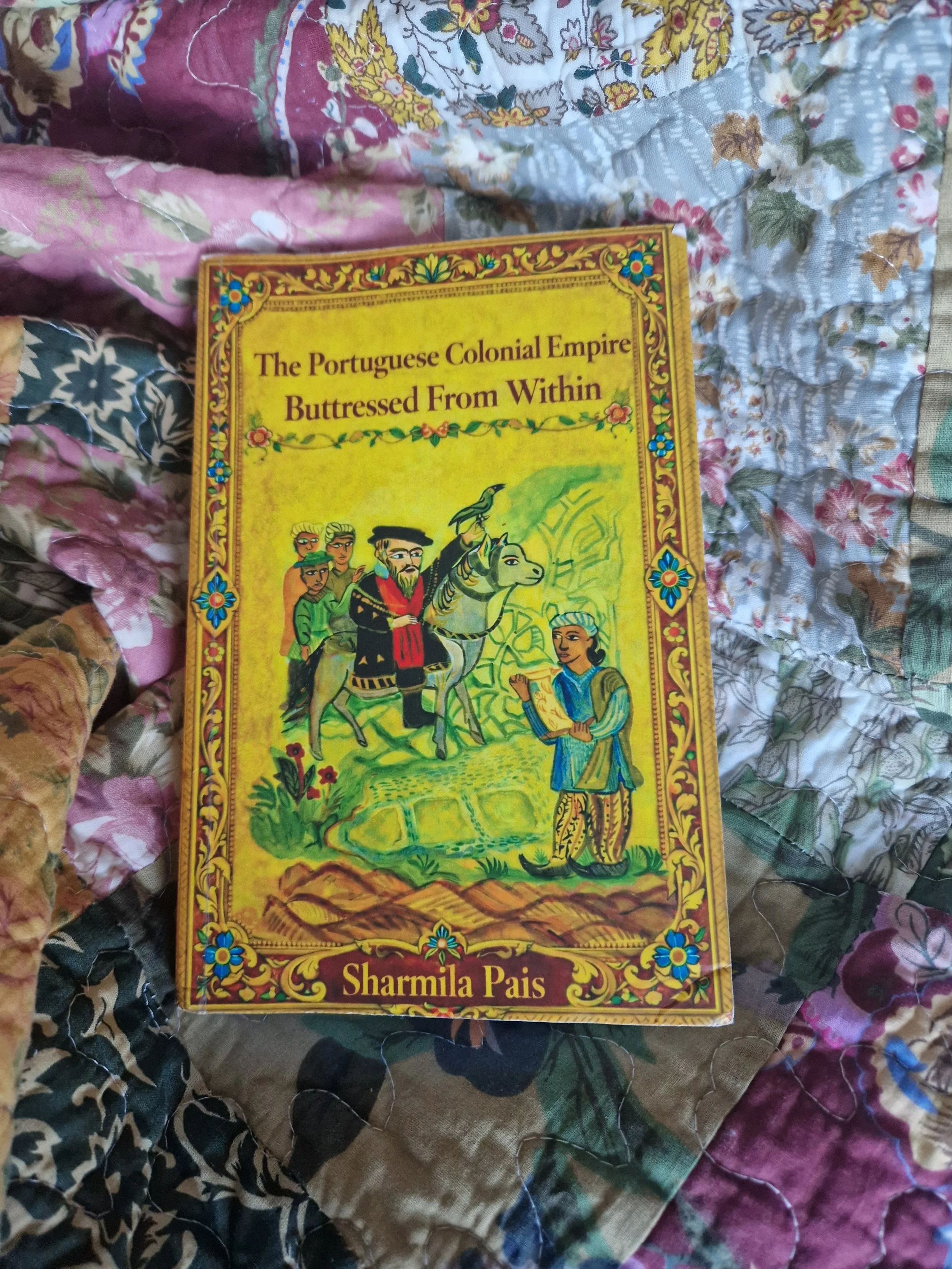
The book can be purchased at here.
Selma Carvalho is the editor of JRLJ.
Banner image is by Kushagra and downloaded from Unsplash.com