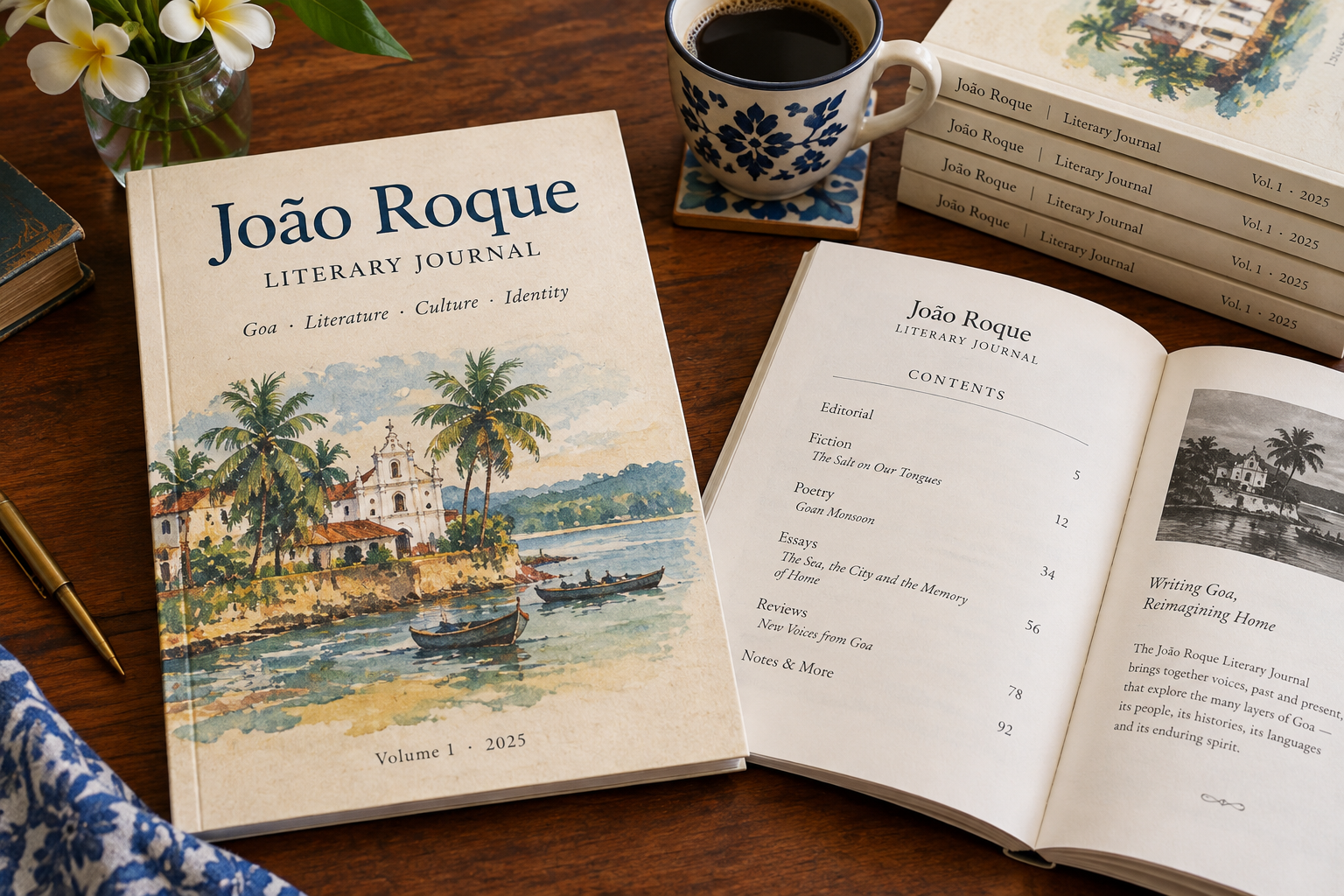
To order a copy of the The Brave New World of Goan Writing & Art 2025, contact Dogears Bookshop Margao.
Fiction
By Nilankur Das
She always remembered the last time she celebrated Christmas, as if the memory itself refused to dissolve into the blur of other nights, as if the cold air of Jharkhand had been preserved in her chest, ready to rise each December when in Goa the Mendonca family draped lights over their balcony and set out cakes heavy with rum and nuts, and she found herself not in the tiled kitchen scrubbing brass or carrying trays but on that hillock far away, with the banyan tree looming and the chapel glowing under the moon
By Selma Carvalho
Christmas Day arrives—sounds muffled, hands mittened, necks sunk in scarves, the air crisp as a ciderapple. Mother returns from morning church service, singing softly to herself, ‘Joy to the world, the Lord is come…and heaven and nature sing.’ This being their last Christmas at the manor house, Anju has put up the Christmas decorations. The house smells of pine, its telltale needles leading to a green spired-tower
non-Fiction
By Ava Sherry
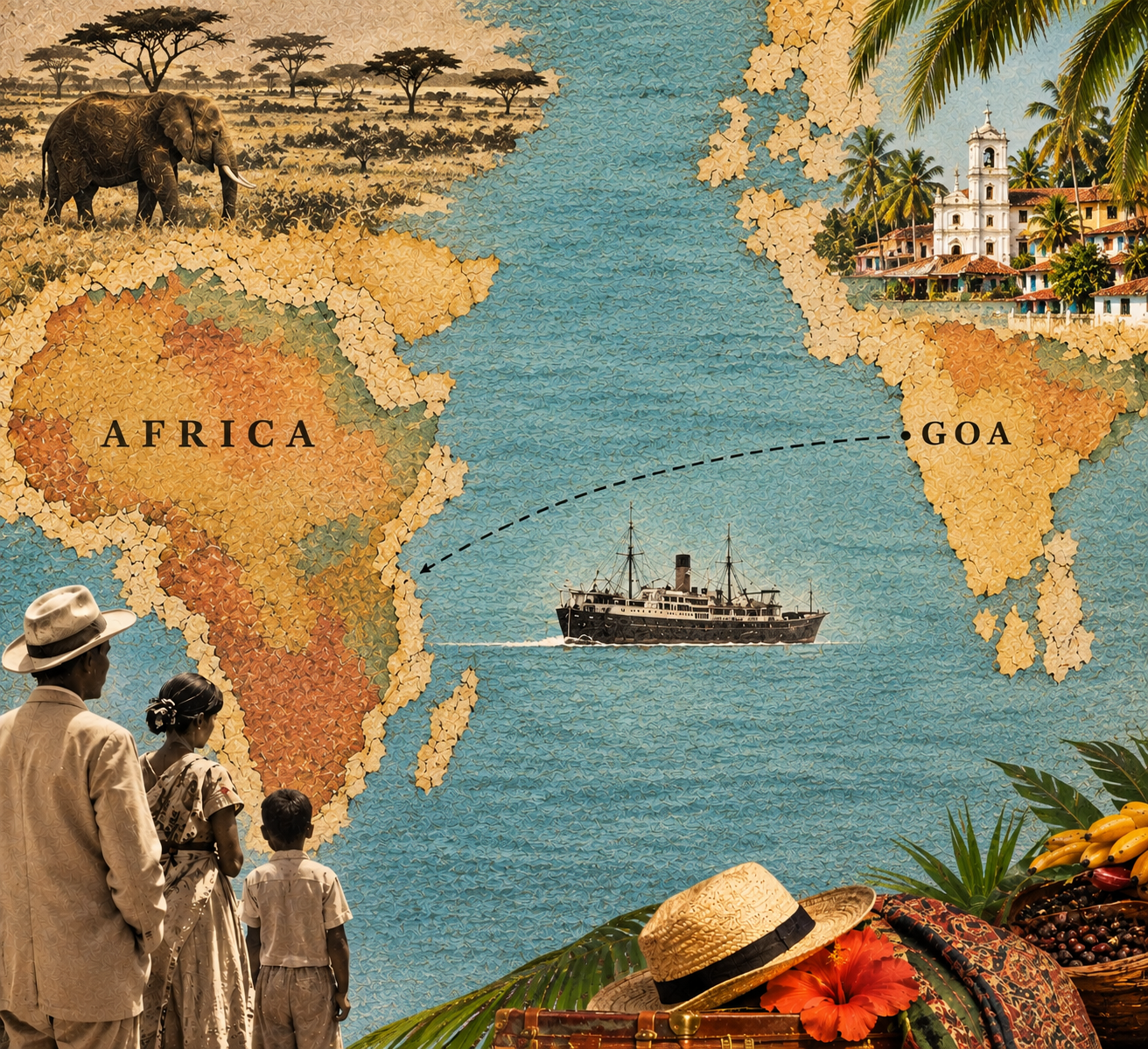
I had been drawn to R. Benedito Ferrão and Vamona Navelcar’s The Destination is the Journey, initially because it wasn’t obvious in its positioning. It felt almost like a puzzle, except with every answer found, another layer of depth revealed itself. The Destination is The Journey forms part of R. Benedito Ferrão’s edited book, Goa/Portugal/Mozambique: The Many Lives of Vamona Navelcar (2017) which is about a Goan artist – Navelcar (1929-2021) – whose life and identity, due to colonial forces, became dispersed across the boundaries of Africa, Asia, and Europe.
By Saachi D’ Souza
Growing up in the dominantly Hindu state of Gujarat, Christmas was more than gifts, family, and cheer. We found ways, albeit small, to bring us back to what was forced into suppression. Like most Catholic kids, I too took piano lessons. The one song that stuck with me was Auld Lang Syne. Every year, between the last carol and the first toast, the familiar melody begins. It isn’t, strictly speaking, a Christmas song. There is no Bethlehem, no manger, no snow. But Auld Lang Syne always arrives, as if called by the hush that settles over the world in late December.
By Michelle Mendonça Bambawale
The PGI was the centre for community activities. We learnt to play badminton and there. We looked forward to the PGI’s long event calendar over Christmas. We did not notice the rundown buildings or the peeling paint. The toilets still haunt me, they were filthy and stinky. As young kids, the highlight was the annual Christmas tree party. We always had fashionable new custom-made dresses to wear. There were needle and thread, lime and spoon and sack races. The highlight was waiting for Santa Claus to give us our Christmas presents.
poetry
By Suneeta Peres da Costa
I wander in the dark among the rooms in my
father’s house, touching talismans for blessings
and luck. Graffiti of old wounds cover the walls;
the ceiling sags and there are places where the
limestone is pocked and shell-shocked. We are
on land but the water is rising.
By Salil Charturvedi
The man sleeps on the rim of the pavement, one hand under his ear, legs bent. This is the shaded part of the esplanade. Now and then, a few bright-yellow flowers from the adjoining Copperpod tree fall and settle around him. His legs are draped with a faded blue-checked lungi and his skin is slightly darker than the tree’s shadow.
By Ashwani Kumar
I hear Columbus is in the city —
a sailor of ocean blue,
spilling secrets of his adventures to storm-starved skies.
Bells ringing, angels singing at traffic lights.
Persian pomegranate seeds scattered along the streets,
each a crimson promise of seers and saints.
book reviews & excerpts
Review by Maulee Senapati
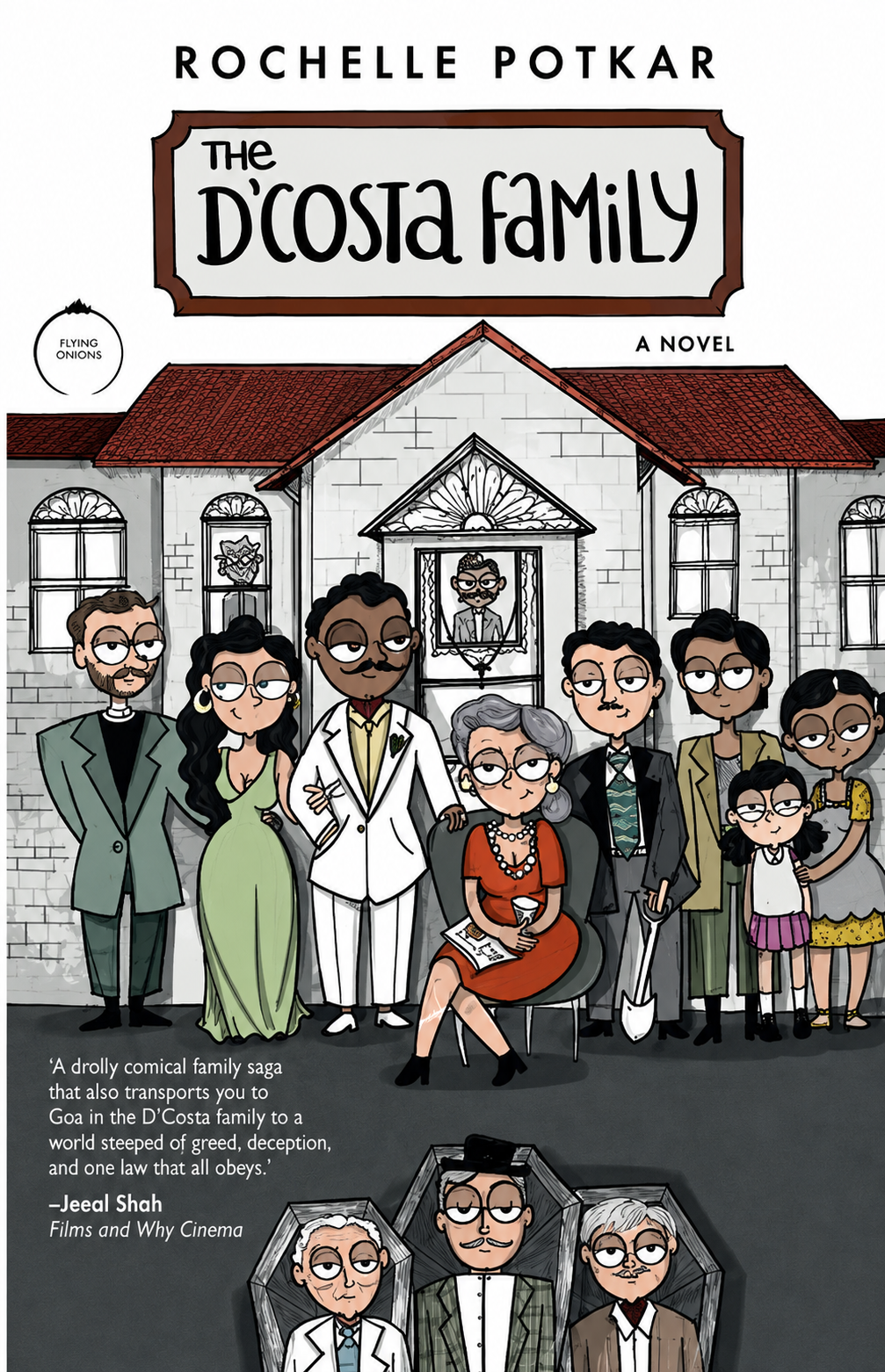
Rochelle Potkar’s The D’Costa Family is a novel of quiet detonations. It dismantles the sentimental myth of the family—especially the joint family—to expose its volatile, often coercive architecture. A masterstroke of quiet disruption, an audacious, intimate excavation of a Goan Catholic household, where the fine-meshed threads of the personal and political are intricately woven into the fabric of daily life.
Review by Michelle M. Bambawale
I encountered Maria Aurora Couto through her two earlier works. In Goa: A Daughter's Story, I marvelled at the grandeur of the life she described in the palatial houses of Salcette, with their colonial connections through the Portuguese language, music, food, and lifestyle. Filomena’s Journeys: A Portrait of a Marriage, a Family, and a Culture, was heartbreaking.
Review by Selma Carvalho
We have to have an honest conversation about the role of the regional writer, that faithful chronicler of the immediacy of the life he encounters around him. He has no greater purpose other than to document this life—its history, nature, people, idiosyncrasies—captured by his indefatigable pen and preserved for posterity. Without the regional writer, literature cannot thrive, authenticity cannot thrive, geographical specificity cannot thrive.
Banner image by Karolina Badzmierowska and downloaded from unsplash.com
The views expressed by contributors do not necessarily reflect those of the Joao Roque Literary Journal. They are here in the spirit of free speech to evoke discussion. Free speech is the pillar of a free society. You can write to lescarvalhos@yahoo.com if you wish to lodge a complaint.
By Sheela Jaywant
I had not seen Jesus’ photograph in anyone’s house before. He was Goanna’s god; you know, some worship Shiva, others Vishnu, or Hanuman or Manguesh/ Subramanium/ Durga/ whoever. Up on the wall, framed in a picture, like the others, He wore no jewels, no silk clothes, no colourful mukut on His head, had no weapons or musical instruments in His hands, no animals or trees around him. The “photograph” showed His face drooping, a halo around the head, eyes closed; not in good health, I thought. No garlands, no bright flowers, no rice, no coconut, no halad-kukum, no incense burning before Him, nothing cheerful.